Ruth Streatfeild was born on 13 August 1894 at Frant in Sussex, daughter of the Rt. Rev. William Champion Streatfeild (1865-1929) and Janet Mary (née Venn) (1872-1952), daughter of Rev. Henry Venn and niece of John Venn the mathematician who invented Venn diagrams. Ruth’s father, who was educated at Marlborough and Pembroke College Cambridge, was ordained in 1890 and served as curate at Sittingbourne and Frant in Sussex, and as vicar of Amberley (with Houghton), St Leonards-on-Sea, and Eastbourne. In December 1928 he was made Bishop of Lewes, but died shortly afterwards on 15 February 1929, aged 63, while travelling on the 09:29 train from Lewes to Eastbourne. Ruth’s great-great grandmother was the prison reformer Elizabeth Fry (née Gurney) (1780-1845), whose daughter Hannah Fry (1812-1895) married William Champion Streatfeild (1810-1852).
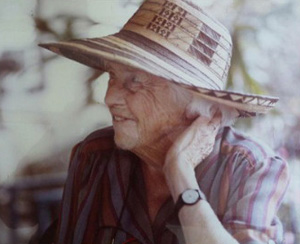
Ruth’s siblings were:
- Mary Noel Streatfeild OBE (1895-1986). An author who featured the Streatfeild family in her semi-autobiographical novels A Vicarage Family(1963), Away from the Vicarage (1965), and Beyond the Vicarage (1971).
- Barbara Louise Victoria Streatfeild (1897-1976)
- William Champion Streatfeild (1898-1968)
- Joyce Elizabeth Streatfeild (1900-1902)
- Richenda Kathrine Theodora Streatfeild (1915-1995)
Ruth was educated at Hastings & St Leonards Ladies’ College and at Laleham School in Eastbourne. Unfortunately, she suffered badly from asthma which resulted in her missing a lot of school.
On 2 August 1928, Ruth was married at St Mary’s Eastbourne to Henry ‘Shor’ Shorland Gervis (1897-1968), son of Dr Henry Gervis (1863-1941) and Matilda Martha Gervis (née Death) (1864-1938) of 14, Stanford Avenue, Brighton. Shor Gervis was educated at Winchester and Corpus Christi Cambridge and taught physics at Sherborne School from 1921 until his retirement in 1964.
After a honeymoon in Brittany, Ruth and Shor moved into Nortons in The Avenue, Sherborne. The house was given to them as a wedding present by Shor’s parents, his father having chosen the house because it was in a higher part of the town which he thought would be better for Ruth’s asthma. Shor’s mother gave them the money to furnish the house.
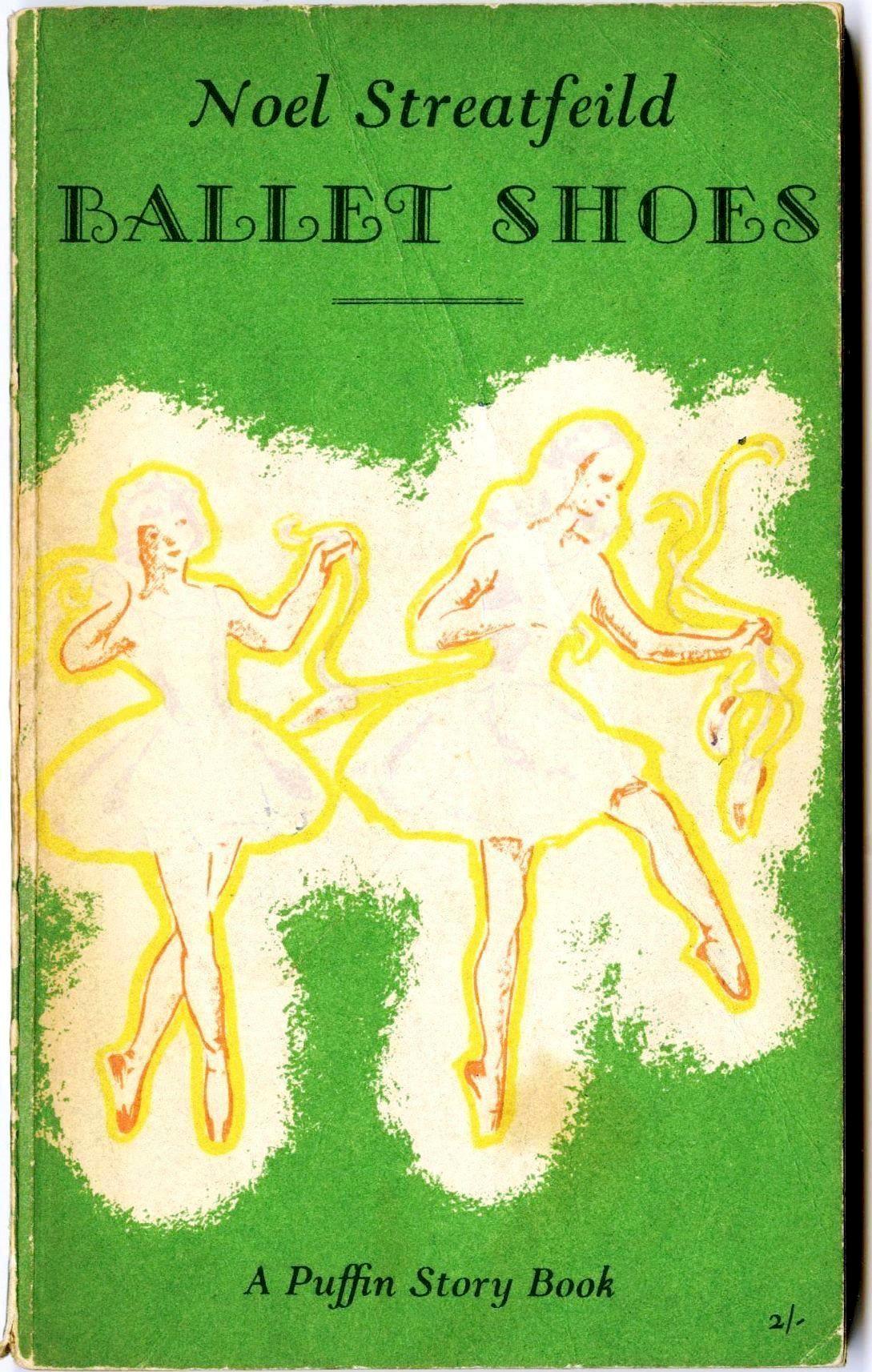
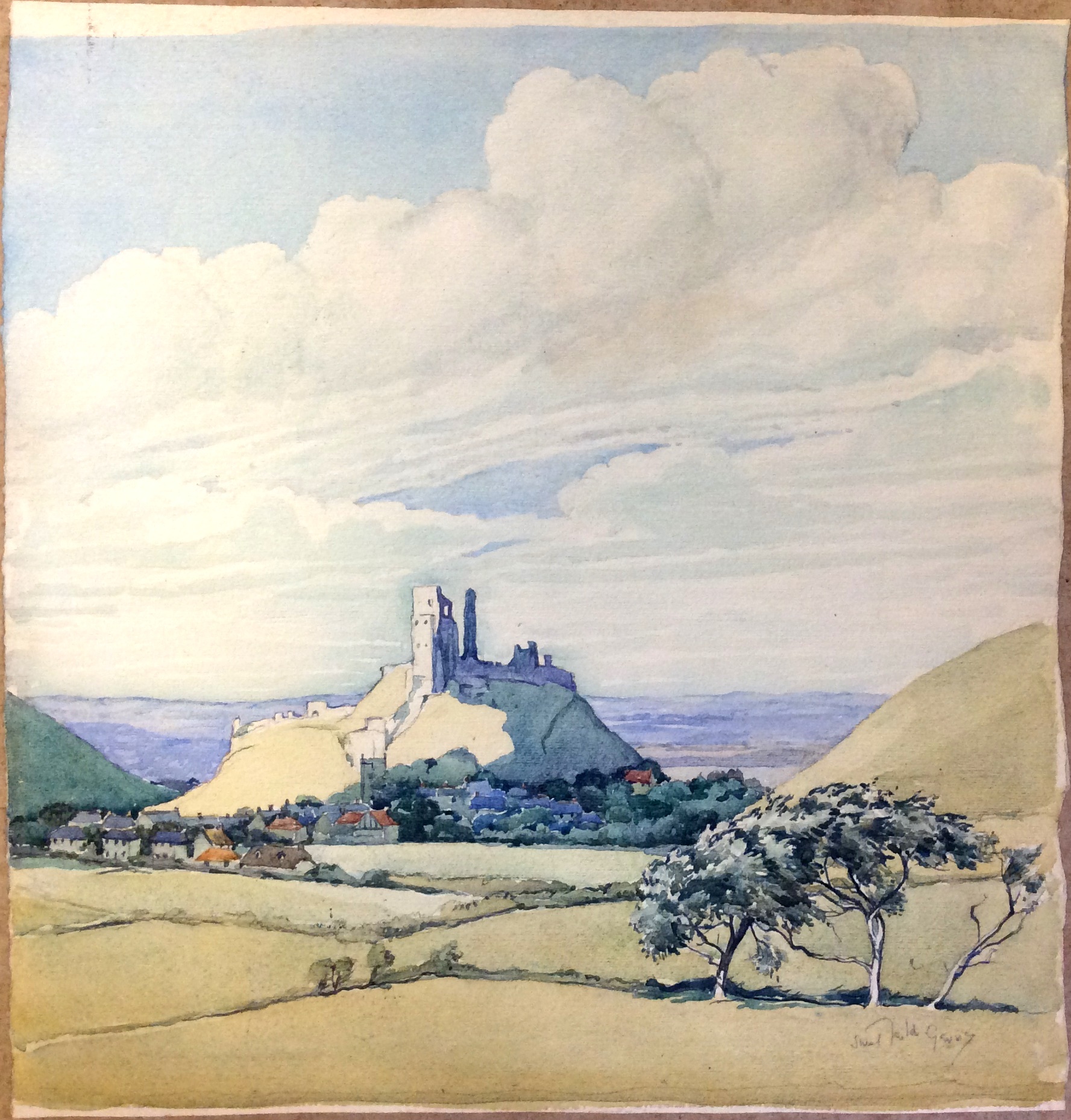
Ruth was a gifted artist in various media – pen and ink, watercolour and oils. She had a particular gift for drawing figures, which is apparent in the many books she illustrated, including for her sister Noel Streatfeild, The Children’s Matinee (1934), Ballet Shoes (1937) and Dennis the Dragon (1939); for her cousin-in-law Kitty Barne (Mrs Eric Streatfeild), She Shall Have Music (1938), Songs and Stories for Acting (1939), Visitors from London (1940), In the Same Boat (1945), Young Adventurers (1947), Musical Honours (1947), The Amber Gate (1951), Elizabeth Fry (1953) and Family Footlights (London, Dent, 1954); for Enid Blyton, The Seaside Family, The Saucy Jane Family, Learn to Tell the Time with Noddy, The Very Big Secret, The Queen Elizabeth Family (1951), The Pole Star Family, The Buttercup Farm Family, The Caravan Family and Four in a Family; for M.A. Murray’s translation of Pinocchio (1939); for John Hampden, The Drama Highway (Book 1) (1946); for Paula Harris, Music at Pendragon (1959) and Cressida and the Opera (1960); for Lorna Lewis, Holiday Luck (1939) and Mystery at Lock House (1947); for Mary Treadgold, No Ponies (1946); and for Rosalind Vallance, The Youngest Omnibus (1934) and Timmy & Roger (1949).
Ruth later explained how she got the job of illustrating the Ballet Shoes, saying that after the birth of her children she started taking on book illustrating, ‘At times, I was doing nearly one book a month. By this time Noel had become famous as an author of children’s books. I illustrated Ballet Shoes for her quite by chance. Her publisher said to her “I have just the right illustrator for you – it’s Ruth Gervis.” “Oh,” said Noel, “She’s my sister.”
One of Shor’s pupils at Sherborne School was the future mathematician and code breaker Alan Turing (1912-1954). Shor taught Alan Turing physics between 1927 and 1931. Shor and Ruth got to know Alan’s mother Sara Turing who visited Nortons in The Avenue with Alan for Sunday tea whenever she was in Sherborne. Sara Turing also stayed with Ruth and Shor, with their visitors’ book recording her visits between 1946 and 1960. Nicolette recalls that Ruth and Shor were very fond of Sara Turing and shortly before Sara’s death she accompanied them when they visited her in a nursing home where she had a lovely sunny room but was by then very frail.
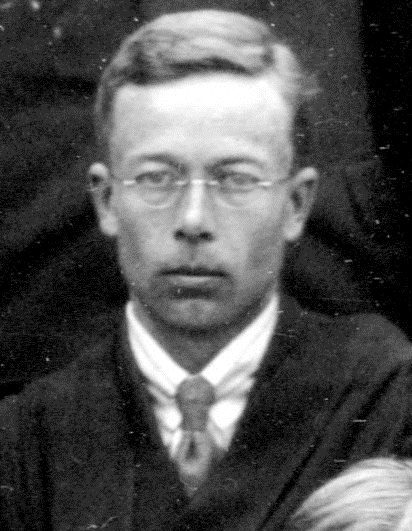
In her biography of Alan Turing, Sara Turing quotes from a letter Shor wrote to her about her son: ‘Alan, the pupil I shall always remember best and be most proud to have known. So able, so modest, though I think really very assured, so much so that he never felt the need to show off, or to score off other people or parade his knowledge and ability. But to me, perhaps, the most lovable characteristic of his mind was the way in which he could be interested in any problem, however trivial. What fun we had once inventing electrical devices we knew would never be built, for counting bees as they flew in and out of their hives. I shall never forget showing him, years ago, an utterly erroneous answer I had from some pupil, just to remind him of the kind of material with which schoolmasters had to cope. He looked at it carefully and then pointed out that though it contradicted everything that the books had to say, yet there was nevertheless a grain of truth in what the boy had been trying to express; so humbling, yet so typical of the charitableness of his mind.’
This reference to bees probably related to Shor’s own interest in bee keeping and the beehive he had fitted into the small window in the drawing room at Nortons through which the bees could be seen working in their hive. Shor was a man of many hobbies and interests, serving on the board of the Urban District Council and as Chairman of Sherborne Youth Club, he was also Hon. Sec. of the British Legion and a member of Sherborne Art Group.
At 16:40 on Monday, 30 September 1940, Ruth was at home at Nortons in The Avenue with her two young children, Nicolette (b.1930) and Paul (b.1933), when Sherborne was heavily raided by a force of some 150 German bombers which dropped several hundred bombs (about 60 tons) in a straight line from Lenthay to Crackmore. About 86 buildings were destroyed in the raid and seventeen civilians died as a result of the bombings. When Nicolette was older Ruth told her how terrified she was when after the raid was over and they were still huddled on the kitchen floor, the front doorbell rang. Ruth jumped up and told the children they were NOT to come with her, which years later she explained to Nicolette was because she was afraid it was a message from the School about Shor, however, it was just a caring neighbour checking up on them.
Thankfully, Shor returned home unharmed but was alarmed to find his children playing around a crater left by an unexploded time bomb in the field at the bottom of their garden, something that Ruth apparently had nightmares about for years afterwards. In a bold step, Ruth and Shor decided that the family should go for a walk into the town believing it was better to see the worst than to sit worrying. At the bottom of The Avenue in Newland they found the milkman’s cart lying on its side and his horse dead. Paul was very upset and kept sobbing ‘the milkman’s horse is dead, the milkman’s horse is dead’. They then discovered that the home in Newland of Miss Lambert, a dressmaker who worked for Ruth, had received a direct hit so they took her back with them to Nortons where she stayed for nine months until her home was repaired. The night after the raid Nicolette remembered being too frightened to sleep alone and so she slept on the floor in her parents room. In the middle of the night there was a colossal noise when the time bomb in the field behind their house and another one at Rathgar in The Avenue exploded, smashing all the remaining window glass at Nortons that hadn’t already been broken in the earlier raid and also all the china on the dresser in their dining room.
The introduction of conscription during the Second World War saw Ruth return to the classroom to help fill the shortage of teachers. In February 1941 the Headmaster of Sherborne School Alexander Ross Wallace agreed to the employment of female teachers as temporary members of staff for the course of the war, and in September 1941 Ruth was appointed art teacher at Sherborne School, where she was only the second female teacher appointed to the School’s teaching staff. Ruth’s appointment proved a great success and she soon raised the standard of art at the School. She believed that if a child could be taught to write then there was no reason why it could not learn to draw. Ruth taught in the Westcott Art School which was above the science laboratories in the Carrington Building and during the morning breaks she would join the science masters downstairs (which included her husband Shor) for tea or coffee brewed over a Bunsen burner. Ruth’s contract was extended beyond the end of the war, making her Sherborne School’s first full-time female teacher. She remained on the staff for twelve years.
On 1 June 1950, when King George VI and Queen Elizabeth visited Sherborne School it was intended that the Queen should make a brief visit to the Westcott Art School, however, when the Queen and Ruth got together the schedule was soon delayed as they discussed their many shared interests.
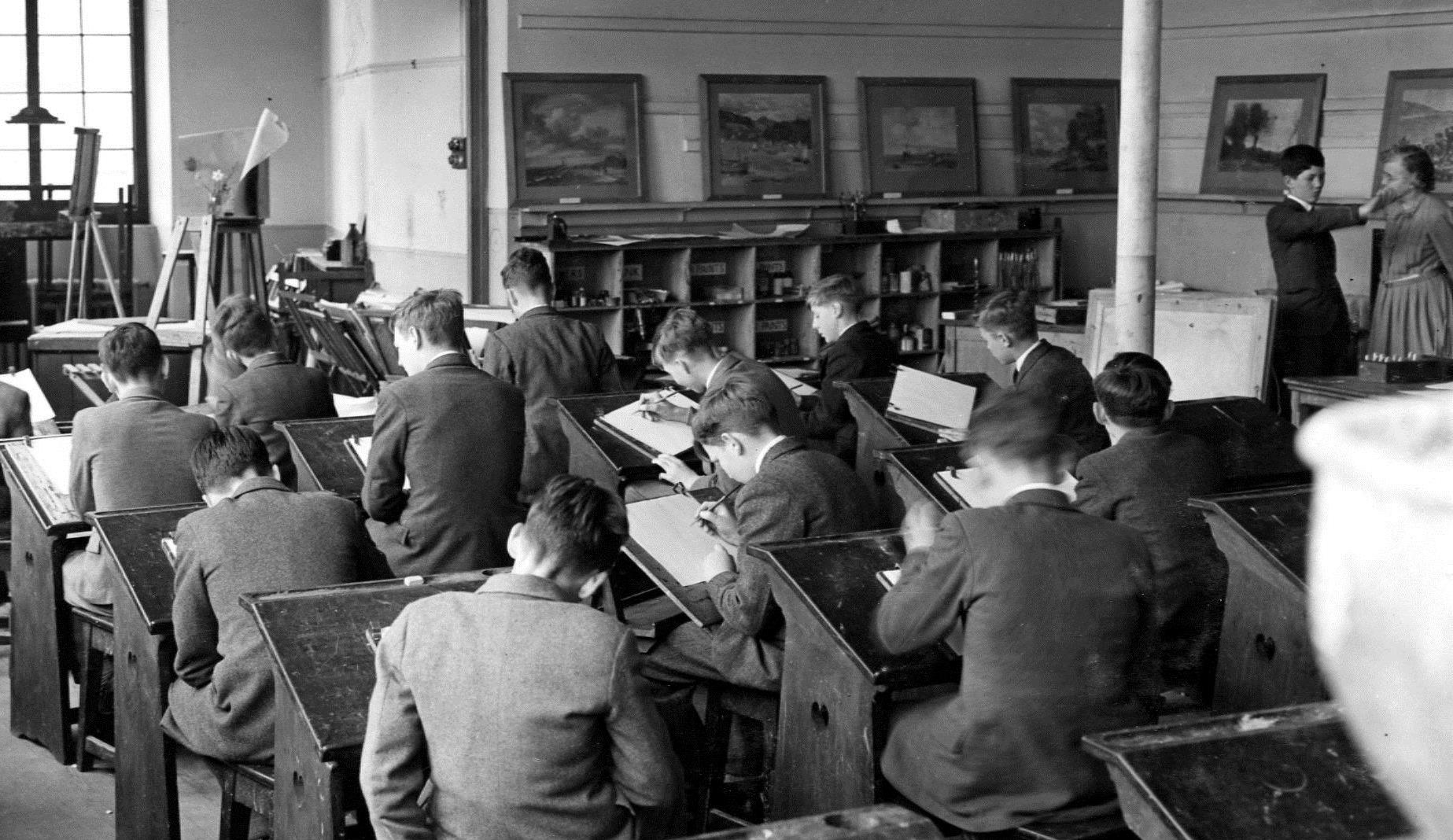
In July 1953, Ruth left Sherborne School to run the art department at Lord Digby’s School, then based at Sherborne House in Newland.
On leaving Sherborne School the following tribute was paid to Ruth in the School magazine The Shirburnian, Summer 1953:
‘It was a somewhat bold move on the part of Canon Wallace, as he was then, to appoint a lady as the sole art teacher in a big public boys’ school, but it can be doubted whether even his habitual optimism could have foreseen what a magnificently successful move he had made. From the moment that Mrs Gervis came, just twelve years ago, art in the School began to go forward. Her enthusiasm was infectious and all those who came under her influence seem to have caught something of it.
A visit to one of the periodical exhibitions at the Art School would soon make it clear to anyone how versatile was the scope of her teaching and how she encouraged the natural ability – often unsuspected – that lies in so many boys to find its own way to the making of really original pictures. Spontaneity was the keynote of it all from the fresh and attractive, if slightly tentative, drawings of the lower school to the more finished and mature works of senior boys; but always it was evident that Mrs Gervis was there with advice and helpful criticism, developing her pupils’ own style and never trying to force them into any kind of mould. It was obvious too that even those without much talent did at least enjoy their work and begin to discover what fun it is to try to express oneself in form and colour. But making oil and water colour pictures was not all that was taught in the Art School. Many excellent models and statuettes were produced. The quality of the posters that adorned the Cloisters from time to time were a tribute to her teaching, and many School societies owed a debt to her help and advice. All this was not achieved without sacrifice.
Mrs Gervis spent long hours at the School and gave up much of her own work as an illustrator. Besides this, the task of managing exhibition is an exacting one – far more so than many people realise. So those who knew her beat are perhaps not surprised that the time has come when she feels that she must have the respite which she well deserves. She can rest assured that for many she has made their time at Sherborne a happier and more satisfying episode. Now she is succeeded by one of her own old pupils, who need have no doubt that he is taking over very much of a going concern. To him we wish great success. But we are all sad at Mrs Gervis’s going, for the boys will miss a wise and gifted teacher and the staff a valued colleague. However, she will not be far away; so, while wishing her all happiness in her new part-time work at Lord Digby’s School, we can say “Thank you”, but we need not say “Goodbye”. After all she has left a hostage with us.’
Ruth ran the art department at Lord Digby’s School until 1964, when both she and Shor retired from teaching. In retirement they decided to build themselves a smaller house in the garden of Nortons, which was designed for them by their nephew Guy Gervis. Ruth and Shor lived together at ‘New Nortons’ until Shor’s death in 1968 and Ruth lived there on her own until 1988.
In later life, Ruth took up sculpture and in 1959 her statue of St Aldhelm was unveiled at the opening in Sherborne of St Aldhelm’s Church of England Controlled Modern School (now the Gryphon School). Ruth also continued her involvement with the Sherborne Art Club, of which she was a founder member and President for twenty years. She also volunteered at Sherborne Museum where she presided over a team she named the ‘Geriatric Play-Group’!

Shor Gervis died at the Yeatman Hospital, Sherborne on 23 July 1968.
Ruth Gervis died at Oxford on 26 October 1988. She had lived in Sherborne for sixty years and left the town ten days before her death to be nearer her daughter Nicolette.
With grateful thanks to Nicolette Winterbottom for so generously sharing information about her mother and to the Gryphon School for allowing us to photograph Ruth’s statue of St Aldhelm.
Rachel Hassall
See also:
- Ruth Gervis(wikipedia)
- Obituary for Ruth Gervis by Oliver Holt
- Ruth Gervis’s grave in Sherborne Cemetery(Find a Grave)
- Lady Jane Digby (1664-1733): founder of a charity school for poor girls
- Margaret Billinger (1883-1942): Headmistress of Lord Digby’s School 1917-1942
- Harriet Clarke (1846-1926): Headmistress of Lord Digby’s School, 1885-1905
- Louisa Bow (1905-1988): teacher, philanthropist, and co-owner of L. & C.E. Bow, coal merchants