Georgina Binnie-Clark was born at the Digby Hotel in Sherborne on 24 April 1871, one of seven children born to Arthur Walter Binnie Clark (1834-1913), manager of the Digby Hotel and former valet to George Wingfield Digby (1797-1883), and Maria Louise Clark (née Letheby) (1837-1908).
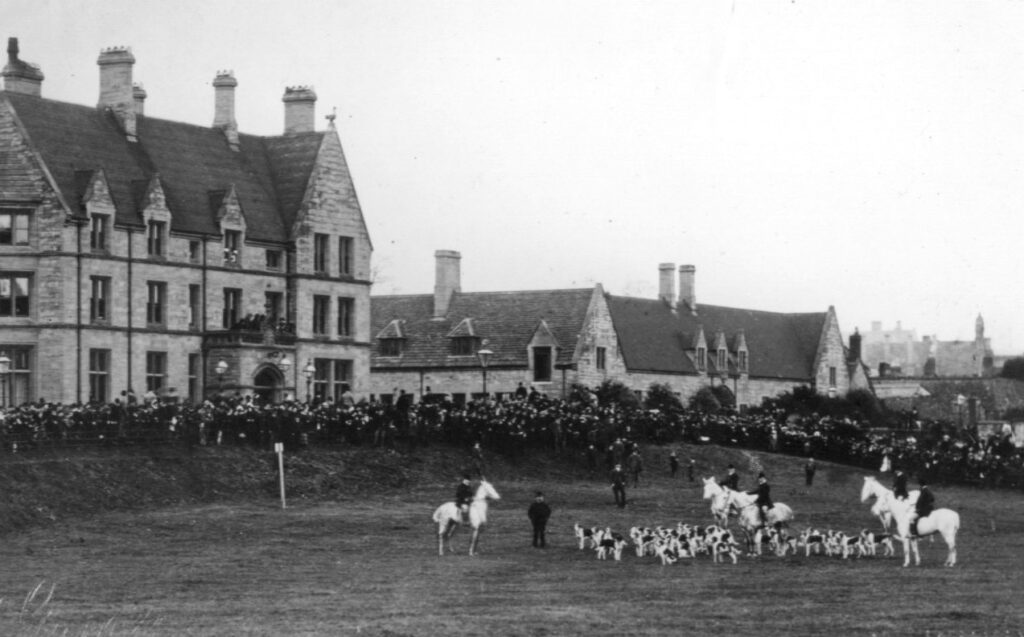
Georgina’s parents were married by licence at Taunton in Somerset on 15 December 1866. At the time of her birth, Maria’s father kept the King’s Arms in North Molton, Devon, but by the time of her marriage to Arthur he was working as a gamekeeper. Georgina’s father was born at Ancrum in the Scottish borders and Georgina appears to have been proud of her Scottish heritage, describing herself when entering the USA as being English by birth but her ‘Place or People’ as Scottish. In 1870, Arthur’s former employer, George Wingfield Digby (1797-1883) of Sherborne Castle, appointed Arthur as manager of the Digby Hotel, which he had built in 1869 to cater for visiting huntsmen and passengers arriving by the recently opened railway line. Maria died at the Digby Hotel on 13 December 1908 and Arthur died at 112, Cheyne Walk, Chelsea on 8 November 1913. They are buried together in an unmarked grave in Sherborne Town Cemetery (Section 13, no.42).
On 25 April 1872, Georgina and her elder brother Walter (1869-1946) were baptised in Sherborne Abbey by the Rev. William Hector Lyon. By 1881 Georgina was nine-years-old and boarding with her elder sister Maria (1867-1929) at a ladies school run by Miss Frances Greatbatch (1845-1919) at 1, Park Villas in Blandford Forum, Dorset, where the staff included a German teacher. Miss Greatbatch gave up the school in 1889 when she married.
By 1891 census, Georgina, then aged nineteen, was living with her parents at the Digby Hotel and described herself as a ‘Music Student’. She was evidently a proficient pianist, later claiming in one of her books to have studied in London and Europe. Georgina may have been taught in Sherborne by George Edwin Lyle (1842-1900), organist and choirmaster at Sherborne Abbey from 1878 to 1900. It was with George’s wife Helen Lyle (née Brown) (1849-1928) and son Arthur Brown Lyle (1877-1933) that Georgina later went into partnership in the firm F. Schipper & Co., a fashion journal and plate agency based at 14, Woodstock Street, Oxford Street, London, later known as the Fashion Journals Guild.
On 25 November 1890, Georgina performed under conductor Louis Napoleon Parker at a ‘Grand Popular Concert’ in the Digby Assembly Room at the Digby Hotel in aid of the Rowland Hill Benevolent Fund. On 10 February 1891, she performed a pianoforte solo at the annual popular concert held in the Digby Assembly Room in aid of the Church Sunday Schools, and on 15 May 1891 she played the piano at a ‘Ballad Concert’ held in the Digby Assembly Room in aid of the London and South Western Railway Orphanage, again under conductor Louis Napoleon Parker. In his autobiography, Several of My Lives (London: Chapman & Hall Ltd., 1928), L.N. Parker wrote that ‘In the town I had a few pupils who were worthwhile. Pupils are divided into two categories, those it pays you to teach, and those who pay you for teaching them.’ Perhaps Georgina was one of the former? On 26 September 1895, Georgina, Ethel and Mabel were bridesmaids at the wedding in Sherborne Abbey of their elder sister Maria to David Rees.
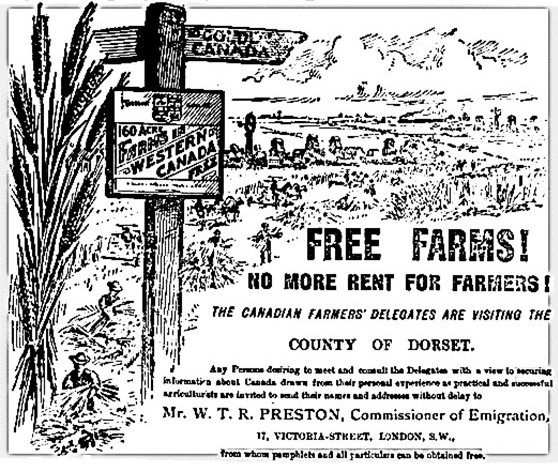
In February 1903, the Canadian Government sent to England a delegation of fifty farmers from Western Canada to promote opportunities for settlers. On 28 February 1903, an advertisement appeared in the Southern Times and Dorset County Herald advertising ‘160 Acre Farms in Western Canada. Free’, ‘Free Farms! No More Rent for Farmers! The Canadian Farmers’ Delegate Are Visiting the County of Dorset.’
On 26 March 1903, Scottish-born Donald McVicker (1847-1931), a member of the Canadian farmers’ delegate for Dorset and South Wiltshire who farmed at Portage la Prairie in Manitoba, gave a talk in Sherborne at the Digby Assembly Room at the Digby Hotel in which he promoted the opportunities in Manitoba for farmers, praising its soil and climate, exhibiting samples of grain and showing views of the country. It may have been in connection with the Canadian farmers’ visit that on 21 March 1903, Georgina’s 31-year old brother Louis and his Irish wife Catherine (née Fagan) sailed on the SS Campania from Liverpool, arriving in New York on 28 March 1903 before making their way to Fort Qu’Appelle where in 1903/4 they filed on a 1/4 section (Saskatchewan Archives Board Homestead Records file no.1328338) and proved up in 1907.
At some point Georgina appears to have decided to earn her living by writing. In March 1896 we find an early example of her engagement with the press when she submitted material to the Gentlewoman magazine about a meet in Dorset of the Blackmore Vale Hunt, some of whom stayed at the Digby Hotel, which was described in the paper as ‘one of the best of hunting quarters’. It may also have been Georgina who in December 1901 sent to the Western Gazette newspaper a letter written from Ventersdorp by her brother Arthur who was then serving in the South African War with the Dorset Imperial Yeomanry.
In 1910, Georgina’s first book A Summer on the Canadian Prairie was published, which she dedicated to her father, her mother having died in 1908. In the book Georgina tells how in the summer of 1905 she and her sister Ethel visited their brother Louis on his homestead at Lipton in Saskatchewan, Canada. Although presented as a light-hearted travel journal, the book should not be treated as entirely factual though as it in Louis is presented as a lazy ‘remittance man’ with no mention of his wife. The book concluded with Georgina buying her own farm near Fort Qu’Appelle in Saskatchewan which she intended to farm herself. Georgina continued the story in her next book, Wheat and Woman (published in 1914) which covers three years on the farm from the harvest of 1905 to the harvest of 1908.
Despite her claims that farming in Canada was profitable, Georgina evidently needed to supplement her income by winter visits to England, where she wrote articles and gave talks. She was evidently a very good public speaker and, on one of her first visits home in April 1908 she spoke at Stepney Reference Library about her experiences of farming in Canada, where ‘her racy and interesting narration of her Colonial experiences was listened to with rapt attention. Her style proved beyond all question how such a life brings out the sterling qualities of self-reliance, resourcefulness and independence in character.’ The following year, in October 1909 she spoke at the National Union of Women Workers’ conference at Southsea about the opportunities in Canada for unmarried women – ‘there is room for school teachers, stenographers, landscape gardeners, vegetable and fruit gardeners, trained nurses, dressmakers, milliners, shop assistants. and boarding house keepers’ and ‘also offered fine opportunities for investment in land for women of business capacity.’
In February and March 1910, Georgina undertook a number of speaking engagements, addressing the annual dinner of the Women’s Agricultural and Horticultural International Union at the Imperial Restaurant in Piccadilly, the Women’s Institute, and to a Women’s Freedom League ‘At Home’ at Caxton Hall in Westminster. She spoke about how homesteading in Canada might hold a solution for the problem of England’s ‘surplus women’, those ‘odd women’ for whom marriage was not an option, and led a campaign to amend homestead legislation so that single women could buy homesteads. She also announced a scheme she had devised for the establishment of cottage training farms for women, for which she was trying to raise £20,000 to place English girls on land in the West. Her plan was for each cottage to be built on a section of land capable of keeping twelve tenants, who would work the section. She would shortly be returning to her farm in Canada with four women pupils who had paid £52 each to learn farming, with the aim that they would eventually be able to farm on their own account. Although never directly involved with the suffragette movement, an interview with Georgina was published in the 5 March 1910 issue of The Vote, the newspaper of the Women’s Freedom League, in which she discussed the situation in Canada where men were awarded free grants of land unconditionally, whereas a woman who wanted to take up land had to pay for it. She said that the best way to get the law changed was for women to prove themselves to be good farmers. She also mentioned the Dower Law in Canada under which a woman had no claim on her husband’s grant of land even though she may have worked just as hard as him to get his patent.
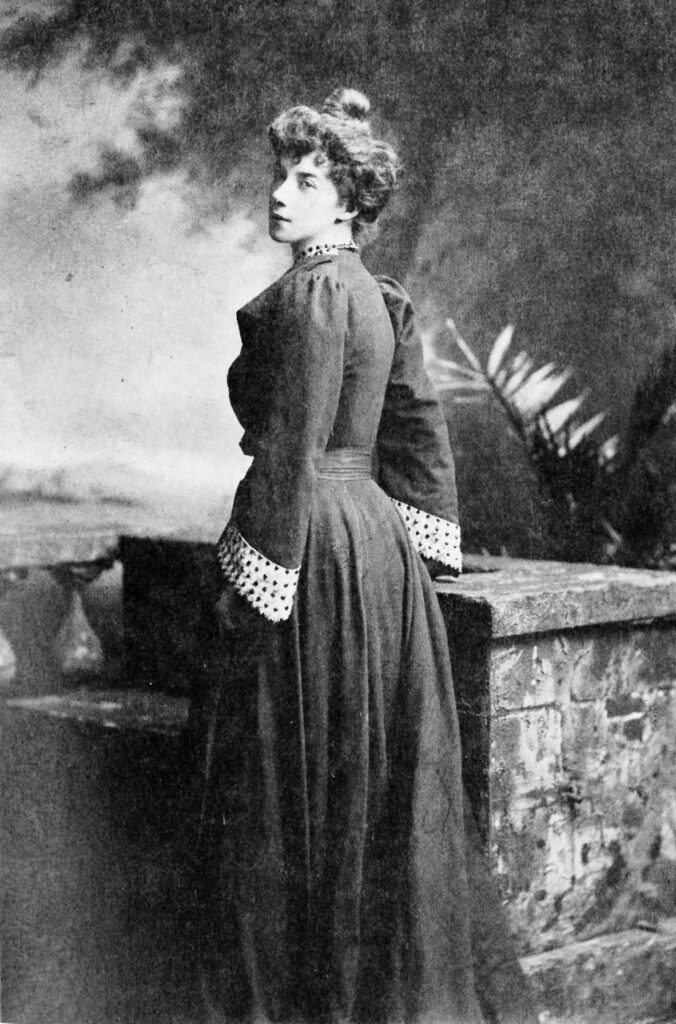
Georgina was now becoming something of a celebrity. Features about her appeared by Alex Johnstone in the London Evening Standard on 12 April 1910, and by Mary MacLeod Moore in The Queen on 16 April 1910. The latter article includes a photograph of Georgina (a cropped copy of the photograph featured above) and described her as ‘educated, cultivated, well-born Englishwoman’, to which Georgina responded from Fort Qu’Appelle on 28 May 1910, thanking Mary McLeod Moore for her kind notice but clarifying that she could not claim to be ‘well-born’, ‘merely an Englishwoman writer, farming in Canada with great pleasure and some success.’ In March and April 1913, Georgina gave lectures on ‘Women and Land in Canada’ at the Suffrage Club in New Bond Street and to a meeting of the the Royal Colonial Institute at the Whitehall Rooms in Hotel Metropole.
Georgina returned to England during the First World War. On 23 February 1915, a notice appeared in the London Gazette announcing that the partnership between Alice Schipper, Georgiana [sic] Binnie Clark, and Helen Lyle in the business F. Schipper & Co., a Fashion Journal and Plate Agency at 14, Woodstock Street, Oxford Street, London, had been dissolved by mutual consent and would in future be carried on by Georgiana Binnie Clark and Helen Lyle. This was followed on 23 July 1915 by another notice in the London Gazette announcing that the partnership between Georgiana Binnie Clark, Helen Lyle, Ethel Binnie Clark, and Arthur Brown Lyle in the business F. Schipper & Co., had been dissolved by mutual consent and that from 1 June 1915 it would be carried on by Georgiana Binnie Clark. From subsequent newspaper advertisements that appeared in 1917 and 1918, this business appears to have made high-class handmade blouses and to have operated under various names including the ‘Fashion Guild’ and the ‘Fashion Journals Guild’. It was under the latter business name that Georgina published her last two books: Tippy: the autobiography of a Pekingese Puppy, told by a little dog and A Birthday Book for the Union Jack Farm Settlement on the Canadian Prairie.
Georgina published Tippy: the autobiography of a Pekingese Puppy in August 1915, which she sold in aid of the Blue Cross to provide ‘comforts for the wounded soldiers and horses fighting in the Great War for Liberty’. The book was described by The Lady’s Pictorial as ‘one of the most charming dog stories we have read for some time. It is the kind of tale children delight to have read to them, and is certain to absorb their whole attention until the last word is reached’, and by the Daily Mail as ‘A pretty delicately-written little story which will appeal to all children and dog-lovers.’ The book was advertised as being available for purchase from all booksellers and stationers, or direct from the publishers, Georgina’s own business, the Fashion Journals Guild.
Georgina was also enlisted to help organise a female agricultural labour force, working for a time as Agricultural Organising Officer for the Board of Trade and for the Women’s War Agricultural Committee.
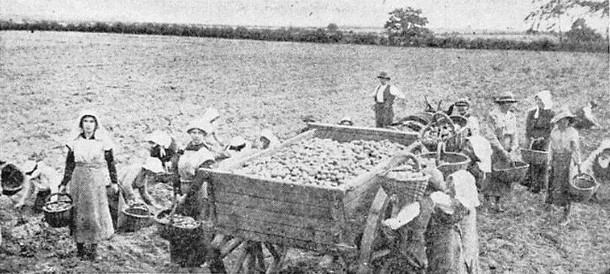
On 20 October 1916, an interview with Georgina appeared in the Sheffield Daily Telegraph in which she explained her war service – ‘The Government sent me up to see what the supply and demand for farm labour was in Yorkshire and Lincolnshire, the object of the organisation being to create this supply and demand. As a matter of fact the supply is the weakest – we have not got nearly the number of women that we want.’ It appears that Georgina was then working for the Women’s National Land Service Corps (WNLSC), which had been established by the Board of Agriculture in February 1916 with the aim of using educated middle-class women to act as ‘shining examples’ to less-educated women in rural communities. In the interview Georgina goes on to say how educated women were needed to take charge of the potato gangs ‘to keep order and encourage the workers’ and that she had lead a gang herself in the Doncaster potato fields because they could not find anyone else, and that at Sandtoft Grange near Doncaster a gang of twelve Varsity women from Girton, Somerville, Leeds, Sheffield and Manchester were working as a gang gathering potatoes for the troops.
In 1916, Georgina became involved with the Vanguard Farm co-operative holding scheme for disabled sailors and soldiers at Sutton Valance near Maidstone, Kent. This scheme was the brain-child of one of Georgina’s former farm pupils, Eliza Violet Bertram (1868-1929). The daughter of William Bertram of Kersewell House, Carnwath, Lanarkshire, Violet Bertram had studied different systems of cultivation in Scotland, England (Hampshire, Worcestershire), Denmark, France and Canada (Saskatchewan and Alberta) and had come to the conclusion that a man and his family could live from the produce of two acres of land.
In March 1916 Georgina chaired a meeting of the Agricultural and Horticultural Section of the London Lyceum Club, at which a committee was formed to raise funds to purchase 65 acres of land at Sutton Valance to set up a co-operative farm where ten disabled servicemen and their families would be provided with a cottage and a quarter of an acre of land, with the aim that from their annual profits the servicemen could pay back a share of the cost of the land and cottage so that in 15 to 20 years they would acquire the freehold of the property. The patron of the Vanguard Farm was Sir Frederick Milner (1849-1931).
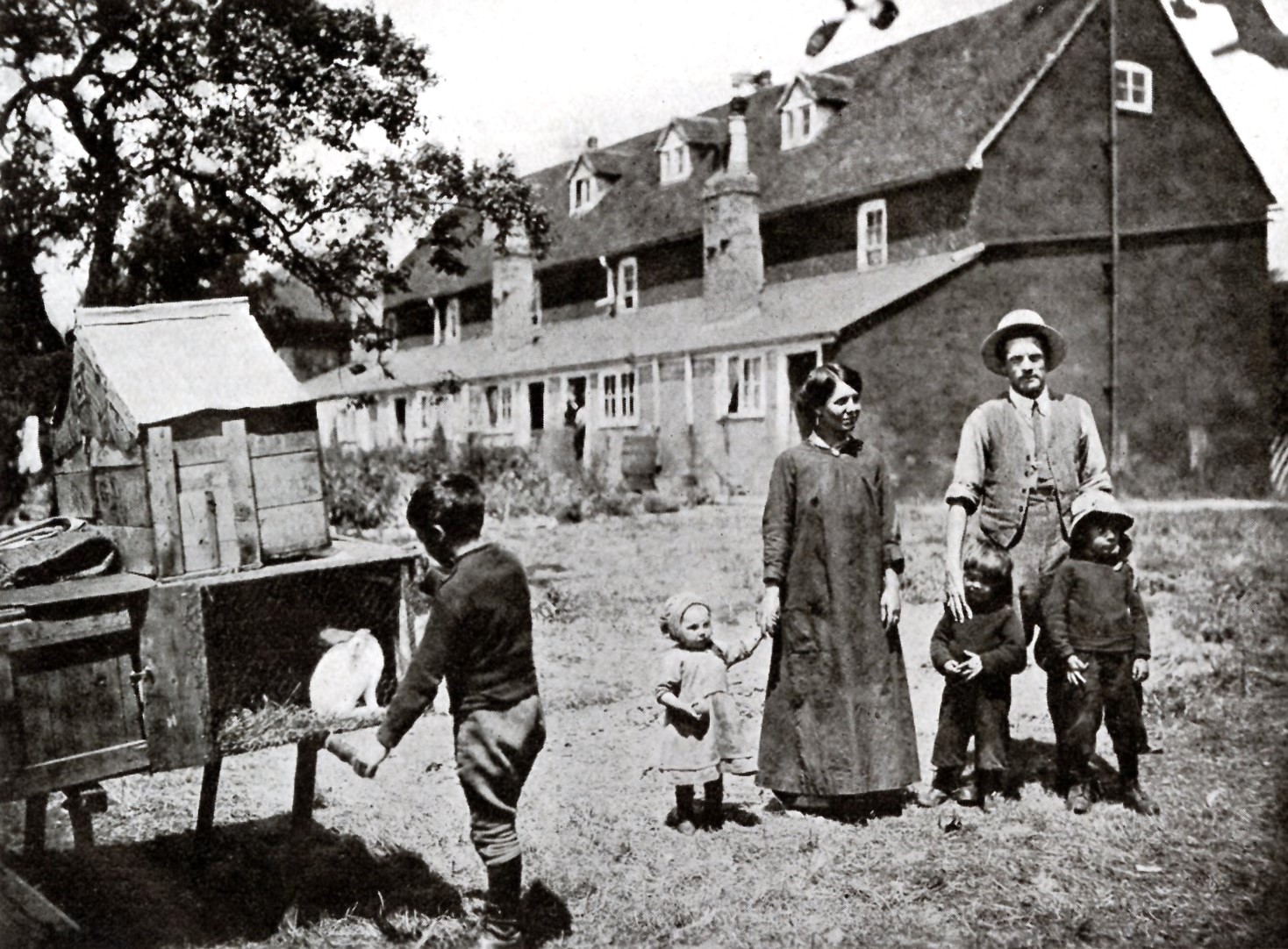
The 18 August 1917 issue of Country Life magazine featured an article by Georgina about Vanguard Farm, which included a photograph of the first family to take up residence, Lance-Corporal Sidney Underwood, his wife Henrietta and four children, Sidney, William, Thomas and Doris. Georgina was still involved with the farm in September 1917 when, as chairman of the committee, she opened a fundraising concert held at Maidstone Corn Exchange and introduced Mrs Parker (Lord Kitchener’s sister) who said that having visited the farm ‘it was a work of which her brother would have warmly approved’.
Returning after the war to Fort Qu’Appelle, Georgina attempted to establish there a similar scheme to Vanguard Farm, and in 1930 co-founded with Rachel Mary Punshon (née Abbs) (1850-1933), a wealthy 80-year-old widow, the Union Jack Farm Settlement for British immigrant families. Rachel Punshon, a well-known breeder of Shetland ponies, was the widow of Nathaniel Killingworth Punshon (1829-1902) of Ingleby House, Northallerton, and had evidently put up the money to purchase the Union Jack Farm. When Rachel died on 23 January 1933 her estate was proved at £123,851 with net personalty of £65,985. She left the bulk of her estate to her nephews and nieces, and the Union Jack Home Farm she left to her late husband’s nephew Bertram Killingworth Punshon. In a second codicil made to her will on 29 September 1932, Rachel bequeathed to ‘Miss Georgina Binnie-Clark of “Binning” Fort Qu’Appelle Saskatchewan Canada a legacy of one thousand pounds free of duty and without imposing any trust in this respect I wish her to use it for the benefit of the Emigration Scheme which she has in hand in conjunction with me.’ At some point Rachel also gave to Georgina Settlers’ Rest, a 160 acre property at Fort Qu’Appelle.
By 1934, the Union Jack Farm Settlement was obviously struggling to survive and Georgina returned to England to promote the scheme. In July 1934, at a meeting at the London Lyceum Club chaired by Lady Evelyn Balfour, Georgina gave an account of the Settlement and the settlers it had helped. She stated that its aim was to improve the conditions of land settlement for British emigrants by providing a home farm where they were trained and worked until they had saved a minimum of $200 to settle on their own farms under the direction of the Union Jack Settlement. That same year Georgina published, under the aegis of her Fashion Journals Guild, a booklet in aid of the Settlement entitled A Birthday Book for the Union Jack Farm Settlement on the Canadian Prairie. Compiled from the Psalms of David by a British emigrant. Unfortunately, lack of Government support for emigration schemes resulted in the Settlement closing in 1937 and Georgina returned to England permanently, leaving Ethel to run the farm at Fort Qu’Appelle.
In April 1947 at 123, Cheyne Walk, Chelsea, Georgina made her last will and testament, a handwritten hardly legible document in which she left the following bequests:
- I appoint my brother Louis Binnie-Clark, my sister Ethel Binnie-Clark and my niece Joan Myfanwy Jenks executors and trustees of my will.
- I leave my property known as Binning (320 acres) Fort Qu’Appelle, Saskatchewan, Canada to Louis Binnie-Clark, Ethel Binnie-Clark, sole surviving son and daughter of my father and mother, and to David Arthur Alexander Rees and John Myfanway Jenks, grandson and granddaughter of my father and mother, to be divided into 4 shares that each may own a share.
- I leave the property known as Settlers’ Rest (160 acres), Fort Qu’Appelle, Saskatchewan, which was left to me by Rachel Punshon, to my sister Ethel Binnie Clark as a mark of appreciation for the care she bestowed on the whole property during my absence by reason of my illness & the Great War.
- I leave the remainder of my property to my sister Ethel Binnie Clark to [?] my [?]
The will was witnessed by Elizabeth Dorothy Rile of 53, Aynhoe Road, Brook Green, London W14, the wife of a retired farmer, and Clifford Sidney Jenks of Wood Cottage, Ashstead, Surrey, a company director.

Georgina Binnie-Clark died on 22 April 1947 at 123, Cheyne Walk, Chelsea, two days before her 77th birthday. Her cause of death was given at myocardial failure and arteriosclerosis. Ethel was present at her death and after her cremation she took Georgina’s ashes back to Canada where she scattered them on the farm.
Biographical information about Georgina’s siblings:
Maria Elizabeth Binnie Clark (1867-1929) was born on 2 October 1867 at Greenhill, Sherborne. In 1881, she was boarding with Georgina at a Ladies School at 1, Park Villas, Blandford Forum, Dorset, run by Miss Frances Elizabeth Greatbatch (1845-1919). On 26 September 1895 she was married in Sherborne Abbey to David Rees, a bank clerk from Bristol who had previously worked in Sherborne. Georgina, Mabel and Ethel were bridesmaids with Kitty Rees, Gladys and Biddy Bishop. Maria and David lived in Cheltenham and had two children, David Arthur Alexander Rees and Joan Myfanwy Rees who married Clifford Jenks and had two sons Dennis and Richard Jenks. Georgina’s papers and photographs were left to her great nephews, Dennis and Richard Jenks. Maria died at Poole in 1929.
Walter Douglas Binnie Clark (1869-1946) was born on 5 February 1869 at Greenhill, Sherborne. From 1879 to 1881 he attended Foster’s School in Sherborne. On Easter Monday 1895, Walter took part in the Wincanton Steeplechases at Hatherleigh, winning the Tally-Ho Steeplechase plate of 21 sovereigns. On 17 September 1895 Walter, then a brewer in Weymouth, was married at Radipole to Louisa (Lillie) Elizabeth Pritchard (1868-), daughter of the artist Edward Francis Drew Pritchard (1809-1905). In 1906 Walter visited Georgina at her farm at Qu’Appelle, Saskatchewan, Canada with a view to opening a brewery, but returned to England. By 1921 Walter was working as a brewer for Trusells Brewery in Sheffield. He later moved back to Dorset, working in the Weymouth area, and died in 1946 at Wyke Regis, aged 77.
Louis Binnie Clark (1873-1952) was born on 24 March 1873 at the Digby Hotel, Sherborne. He attended Foster’s School in Sherborne (January-December 1881), Sherborne Preparatory School (c.1883-1886), and as a day boy at Sherborne School (27 January 1887-8 November 1888). Louis was a keen swimmer and in August 1889 took part in the annual Sherborne Swimming Club’s aquatic sports competition in the school baths, winning the running header, the 100 yards, the high dive, the obstacle race (100 yards), the life saving competition and the 50 yards (open). By 1891 he was a student brewer at Windle, St Helens, Lancashire (possibly at Dentons Green Brewery). On Easter Monday 1895, Louis took part in the Tradesman’s Steeplechase at Hatherleigh, coming second on his father’s horse ‘Butterfly’. On 22 June 1901, Louis, then a brewer at 115, St James’s St, Dublin (home of Manders Brewery) was married in the Roman Catholic chapel of Clongowes Wood College in County Kildare to Catherine Fagan (1873/6-1940) of Yellow Walls, Malahide, Co. Dublin. On 21 March 1903, Louis and Catherine sailed on the SS Campania from Liverpool, arriving in New York on 28 March 1903. They went on to Canada where in 1903/4 Louis filed on a homestead in 1/4 section (see Saskatchewan Archives Board Homestead Records file no 1328338) near Fort Qu’Appelle, and proved up in 1907. Louis and Catherine returned to the UK in 1908. During the First World War, Louis served in the Royal Field Artillery (entered 1 March 1917) and the Hampshire Yeomanry, became a lieutenant. On 29 April 1921 he retired from the army, living at Highfield, Uplands, Stroud, Gloucestershire. In 1921 Louis was working as a Technical Brewer for Stroud Brewing Co. Ltd., and living with Catherine at Stroud. Louis and Catherine’s marriage appears to have fallen apart and by 1939 Louis was living in Witney, Hampshire with Rosa Milton. Catherine died at yellow Walls, Malahide, Dublin on 31 March 1940 and on 7 August 1947 Louis was married at the Register Office in Dorchester, Dorset, to Rosa Annie Milton. Louis died on 18 August 1952 at Portwey Hospital in Weymouth, Dorset.
Arthur Cameron Binnie Clark (1874-1921) was born on 18 August 1874 at the Digby Hotel, Sherborne. From 1881 to 1885 he attended Foster’s School in Sherborne, then Mr Covington’s school at Tunbridge St Stephen, and from 27 September 1888 to Summer 1889 he was a day boy at Sherborne School. By 1891 Arthur was working as a bank clerk and living in Langley Burrell, Chippenham, Wiltshire. In 1892 he was apprenticed as a sailor for four years and in 1896/7 received a certificate of competency as a second mate on a foreign going ship in the merchant navy. In January 1900 Arthur enlisted at Weymouth as a Private with the Imperial Yeomanry, Base Depot Company Late 26 Co. 7 Bn, serving from February 1900 to July 1902 as a Trooper in the South African Boer War. A letter he wrote to his parents from Ventersdorp on 1 November 1901 was later published in the Western Gazette (6 December 1901) in which he wrote: “We had a lively time on October 29th. Eighteen of us were out guarding some cattle numbering 800, and after being out an hour we were surprised by three commandoes of Boers, numbering 1,400. They attacked us in order to get the cattle. Well, you might expect they did get the cattle, true, but they had to pay pretty dearly for it. Although we only had about 50 mounted men, 30 infantry, and two Artillery guns, we managed to knock down 20 killed and 10 mounded, an only one was killed of the Dorset I.Y. and two wounded. Towards the finish of the fight eight of us were taken prisoners by the Boers. I was one of the number. I was retiring at full gallop from our post, and the Boers were trying to cut us off from the rest. I fired about five shots at them from my horse as I was galloping at full speed to try and get away. My horse, however, put its foot in a hole, and turned ‘head over heels,’ and, of course, I had to come off. The horse kicked me in the head, and galloped away, and when I was getting up there were no less than five Boers covering me with their rifles, and said ‘Hands up.’ I could not do anything, as my rifle was blocked with dirt, so I had to put my hands up, and, much to my disgust, they stripped me of my coat, tunic, boots, socks, rifle, hat, and ammunition. I also had £18 taken from me by the curs, but I will have my own back yet. I thought my last had come, but it was my luck. I walked into camp and got another rifle, more ammunition, saddle, another horse, and went out again, and saw the last of the fight, and, by jove, it was a nice little warm fight.” In July 1902 at Elandsfontein, Arthur requested to be discharged from the army to take up civil employment at the East Rand Gold Mine at Boksburg. In about 1908 he emigrated to Canada and farmed at Qu’Appelle, Saskatchewan, where he died on 24 December 1921 and was buried at Fort Qu’Appelle Lakeview Cemetery, Saskatchewan, Canada.
Mabel Binnie Clark (1878-1924) was born on 22 January 1878 at the Digby Hotel, Sherborne. On 26 September 1895, along with her sisters Georgina and Ethel, she was a bridesmaid at the wedding in Sherborne Abbey of their elder sister Maria to David Rees. On 13 December 1908 Mabel was present at the death of her mother at the Digby Hotel in Sherborne. By 1911 she was working at a tearoom and living with her sister Ethel at St Stephens Mansions, Westminster. On 8 November 1913 Maria was present at the death of her father at 112, Cheyne Walk, Chelsea, and attended his funeral at Sherborne Cemetery on 12 November 1913. On 1 December 1914, Ethel was married at St Austell Registry Office in Cornwall to Anthony Philip Morse (1890-1915), a 2nd Lieutenant in the Duke of Cornwall’s Light Infantry. Before the war Anthony had been potteries representative for Messrs. Varcoe and Sons (Ltd.) of Stoke on Trent in Staffordshire. He died from his wounds at a military hospital in France on 5 June 1915. By 1921 Mabel was living at 15, Grosvenor Road, Westminster and working as a restaurant assistant at 3, Sackville Street. Ethel was present at Mabel’s death on 12 December 1924 at Hillside, De Montfort Road, Lewes, Sussex, aged 46. Cause of death was given as Carcinoma of breast (3 years). She was buried on 17 December 1924 at Putney Vale Cemetery, Wandsworth, Surrey.
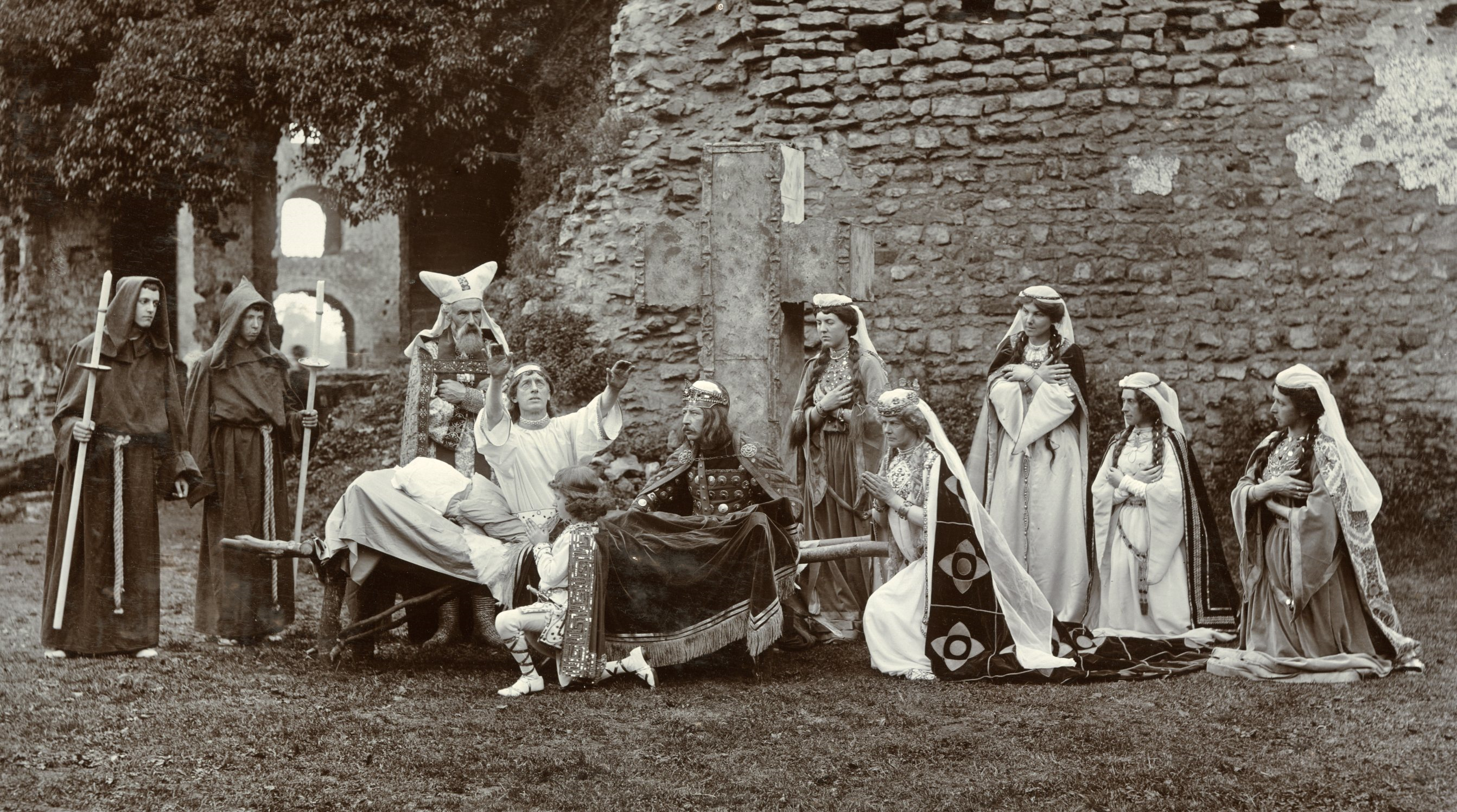
Ethel Binnie Clark (1879-1955) was born on 24 May 1879 at the Digby Hotel, Sherborne. In May 1888 the Western Gazette newspaper reported that ‘a little girl, the daughter of Binnie Clark, of the Digby Hotel, fell off a tricycle and dislocated her shoulder.’ On 26 September 1895, Georgina, Ethel and Mabel were bridesmaids at the wedding in Sherborne Abbey of their elder sister Maria to David Rees. On 12-16 June 1905, Ethel took part in Louis Napoleon Parker’s staging of the Sherborne Pageant at Sherborne Old Castle, where she appeared as a ‘lady’ in episode 3, and later signed her name ‘Ethel Binnie-Clark’ in the volume of signatures presented to L.N. Parker at a ceremony held on 24 October 1905 in the Digby Assembly Room at the Digby Hotel.
Ethel may have undertaken nursing training, but by 1911 she was working as a journalist and living with Mabel at St Stephens Mansions, Westminster. On 12 November 1913 she attended her father’s funeral at Sherborne Cemetery. Ethel spent some time with Georgina in Canada, running the farmstead during Georgina’s absence due to illness and the First World War. By 1921, she was working as a housekeeper for Major James and Beatrice Gilman at ‘Mascot’, Beach Road, Shoreham-by-Sea in Sussex, and on 12 December 1924 she was present at the death of her sister Mabel Morse at Hillside, De Montfort Road, Lewes. On the 19 April 1929, Georgina and Ethel sailed on Cunard SS Ascania from Southampton for Montreal, giving their destination as Binning Farm. Ethel gave her occupation in England as a secretary and said her intended occupation in Canada was as a farmer. Ethel became a permanent resident at Fort Qu’Appelle, where she died on 13 December 1955 and was buried at Fort Qu’Appelle Cemetery, Saskatchewan, Canada.
Books written by Georgina Binnie-Clark:
A Summer on the Canadian Prairie (London: Edward Arnold, 1910)
Wheat and Woman (Toronto: Bell & Cockburn; London, William Heinemann, 1914)
Tippy: the autobiography of a Pekingese Puppy, told by a little dog (London: Fashion Journals Guild, 1915)
A Birthday Book for the Union Jack Farm Settlement on the Canadian Prairie. Compiled from the Psalms of David by a British emigrant (London: Fashion Journals Guild, c.1934)
With thanks to Barbara Elsmore for so generously sharing with me her own research into Georgina Binnie-Clark, which is available at the Dorset History Centre.
Rachel Hassall
Further reading:
- Georgina Binnie-Clark, A Summer on the Canadian Prairie (London: Edward Arnold, 1910)
- Georgina Binnie-Clark, Wheat & Woman, with an introduction by Susan Jackel (Toronto: University of Toronto Press, 1979)
- Sarah Carter, Imperial Plots: Women, Land, and the Spadework of British Colonialism on the Canadian Prairies (Winnipeg: University of Manitoba Press, 2016, reprinted 2018). Includes an excellent biography of Georgina Binnie-Clark.
- Susan Jackel, A Flannel Shirt & Liberty: British Emigrant Gentlewomen in the Canadian North West, 1880-1914 (Vancouver: University of British Columbia Press, 1982)
- Emily Gwiazda, ‘Georgina Binnie-Clark’, The Canadian Encyclopedia (online), 2023
- David B. Marshall, ‘Georgina Binnie-Clark’, Encyclopedia of the Great Plains (online)
- Gwen Tuinman, ‘Women’s Farming Activist: Georgina Binnie-Clark (1871-1947)’ (online)