Emmeline Mary Tanner was born on 28 December 1876 at Locksbrook Place, Weston, Bath, Somerset. The eldest of seven children born to Samuel Thomas Tanner, a coal merchant, and Jeanetta Jane (née Fry).
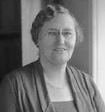
At the age of 13, Emmeline became a student teacher and went on to teach at private schools in Birmingham, Southampton, and Halifax. Unable to attend university as an internal student, she studied for an external degree at the University of London and graduated in 1904 with a first class degree in history.
In 1904, Emmeline was appointed history mistress at Sherborne School for Girls by headmistress Miss Beatrice Mulliner, a post she held until 1909. She later described arriving in Sherborne for the job interview:
‘I feel a little thrill as the train brings me in sight of the Castle grounds. And to walk up Digby Road till one comes to the beautiful Abbey and the Almshouses, then up Yeatman Road and peep through the gateway towards the boys’ studies, chapel, and library – all pure joy.’
Known as ‘Tannie’ by the girls, she argued that it was ‘far more important to train the girls’ powers of reasoning than merely deliver a load of facts’ and, in an effort to ‘promote thinking rather than memorising’, wrote her own textbook, The Renaissance and the Reformation: a Textbook of European History (1908),
Kathleen Moore, a fellow member of the teaching staff at Sherborne Girls’, described Emmeline in the classroom: ‘everyone who knew her loved her for her wonderful power of sympathy, and admired her outstanding ability. A lesson from her could not be dull! She was as keen to help the slow child as the quick child. Sherborne is indeed lucky to have had her even for so short a time as five years.’
After leaving Sherborne, Emmeline went on to serve as founding headmistress at Nuneaton High School (1910-1920), headmistress at Bedford High School, and lastly at Roedean School. She also served as Chair and President of the Association of Headmistresses.
From 1942 to 1944, she was a member of the Board of Education (Fleming) committee on public schools and helped draft the policy which led to the Education Act 1944, which recommended that ‘opportunities of education in the public schools should be made available to boys and girls… irrespective of the income of their parents.’ Her contributions to drafting the Act led in 1947 to her being created a Dame Commander of the Most Excellent Order of the British Empire (DBE) for services to education. That same year she was also given an honorary Masters degree from the University of London.
She believed in training girls for useful work in the world and encouraged them to use their vote.
Emmeline retired to Lilbourne, Barnfield, Marlborough, Wiltshire, and died at Savernake Hospital, Marlborough, on 7 January 1955.
Rachel Hassall
Further reading:
- Sherborne School for Girls, 1899-1949 (Sherborne School for Girls, 1949)
- Susan Major, Doors of Possibility: The Life of Dame Emmeline Tanner, 1876-1955 (Cambridge: Lutterworth Press, 1995)
- Barry Williams, So Many Opportunities. A Historical Portrait of Sherborne School for Girls (London: James & James Ltd., 1998)
- Dame Emmeline Tanner (Wikipedia)