Mrs Effield Bogle breathed her last at the Old Bank House, Long Street, Sherborne, on 28 May 1905. A few days later the following obituary appeared in the Western Chronicle:
‘The death is recorded of Mrs Bogle, widow of the late Major Bogle, V.C., a very old resident of the town, who passed away at her residence in Long Street early on Sunday morning. The deceased lady was formerly a Miss Messiter, of Bishop’s Caundle, and she first married Mr Robert Wilmott, who was associated with the silk industry of Sherborne. After his demise his widow, who formerly lived at Sherborne House, where Sir Julius Glyn, Bart., now resides, married Major Bogle, V.C., who died some years ago. Deceased was a lady of considerable culture, and in her time had been a wonderful hostess. She was a staunch supporter of the Abbey, where there is a brass erected to the memory of Major Bogle, and at the time when the new pulpit was placed in the church she gave a handsome ewer for the font. She was always a generous friend of the Yeatman Hospital, of which she was a life governor, and besides her contribution as such she always gave £5 a year to the institution in memory of her husband. In 1902, as an act of thanksgiving for her recovery from serious illness, deceased presented the Hospital with £50. According to her particular wish Mrs Bogle will be cremated at Woking Crematorium, the remains of her late husband having been treated in the same way.’[1]
So, who was this lady of ‘considerable culture’, a ‘wonderful hostess’, and ‘a generous friend of the Yeatman Hospital’?
In many ways, Effield Bogle (formerly Willmott, née Messiter) (1834-1905) led the typical life of a respectable, middle-class Victorian woman. She married twice, firstly to a wealthy businessman and secondly to a retired military man whose family wealth was connected to the slave trade.[2] During her adult life she lived in three large town houses, which she managed with the help of servants. Outside of the home she engaged in socially respectable ‘good works’ in the local community. She lived during a time that saw great changes in the cultural and economic life of the country brought about by the coming of the railway, improvements in sanitation and living conditions, and legal changes allowing married women to control their own property. Her final wish, to have her body cremated, was perhaps her only act of defiance against the social norms of the day.
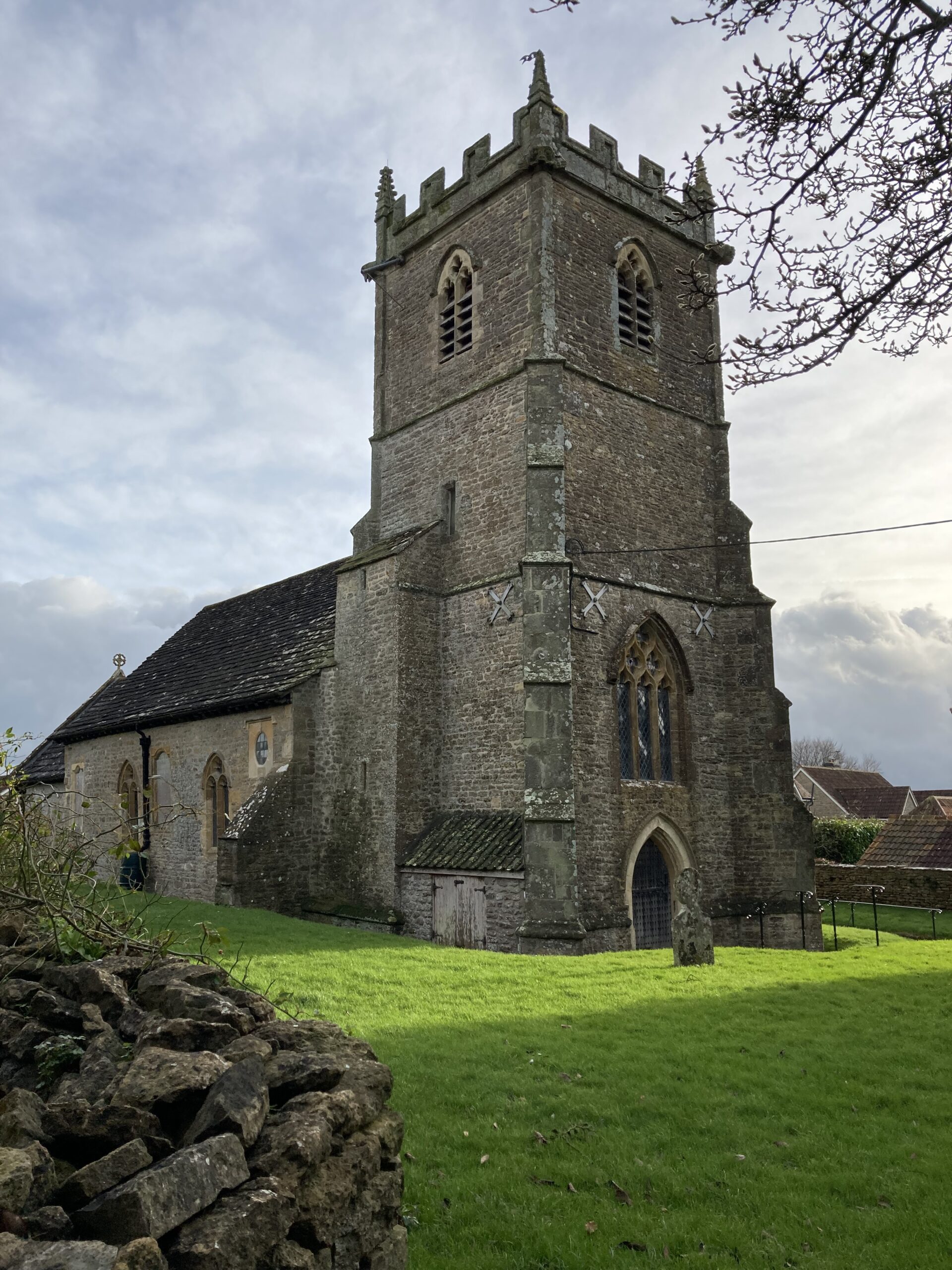
Effield Messiter was born at Stourton Caundle in 1834, the second of eight surviving children (six daughters and two sons) born to the Rev. Richard Messiter (1800-1885) and his wife Laura (née Michell) (1811-1887). Effield’s father was ordained a priest in 1824 and from 1830 to 1864 served as perpetual curate of Stourton Caundle. He was also rector of Caundle Marsh and Purse Caundle in Dorset, and Bratton St Maur (or Bratton Seymour) in Somerset, all livings to which he was presented by Sir Richard Colt Hoare (1758-1838) of Stourhead, Wiltshire.[3]
Following their marriage in 1830, the Rev. Messister and his wife lived at Stourton Caundle, a small rural village, which by 1841 had a population of 394 inhabitants.[4]
Effield and all her siblings, apart from the youngest Caroline, were born at Stourton Caundle. Effield was christened in the parish church on 28 July 1834[5] and named after her paternal grandmother Effield Messiter (née Dyne) (1767-1852), the wife of the Rev. John Messiter (1763-1828). Effield was obviously a family name as her great-grandmother was named Effield Dyne (née Chapman) (1736-1779).
Effield was three years old when on 20 June 1837 Queen Victoria ascended to the throne. She would remain on the throne for nearly all of Effield’s life, with her 63-year reign spanning a period of remarkable social, economic and cultural change.
Very little is known about Effield’s early life, but when the 1841 census was taken on the night of 6 June 1841 we find eight-year-old Effield living in Caundle Street, Stourton Caundle with her parents, her four sisters, Laura Messiter (1832-1921), Mary Messiter (1834-1858), Emma Tucker Messiter (1839-1924), and Margaret Symons Messiter (1840-1931), and two live-in female servants. The following year her brother Edward Moulton Messiter (1842-1887) was born, followed in 1845 by Henry Wolcott Messiter (1845-1865), and in 1853 by Caroline Dyne Messiter (1853-1913).
Although Effield was described in her obituary as ‘a lady of considerable culture’, it is not known where she or her five sisters were educated. No governess is listed living with the Messiter family in either the 1841 or the 1851 censuses. The sisters may have attended a ladies’ school at Sherborne, such as that run by Mrs Mary Ann Charlotte Charlton (1787-1873) in Newland,[6] where the sisters would have met young ladies of a similar age and social circle, such as Emma Jane Morgan (1840-1928) and Caroline Agnes Morgan (1842-1819), the daughters of Charles Morgan (1796-1857) and Caroline Morgan (née James) (1810-1877) who lived opposite the school at Greystones in Newland[7], or Eliza Willmott (1831-1917) and Susan Willmott (1841-1916),the daughters of John Percival Willmott (1804-1858) and nieces of Robert Willmott (1814-1875), who ran a silk throwing business in the town. More is known about the education of Effield’s brother Henry who briefly attended Sherborne School as a boarder from 1861 to 1862[8], and her other brother Edward who joined the Royal Marine Light Infantry as a gentleman cadet.[9]
With six daughters to find husbands for, the Rev. Messiter must have sympathised with the character of Mr Bennet in Jane Austen’s novel Pride and Prejudice who had to deal with the trials and tribulations of his five daughters’ attempts to secure good marriages. As part of the county set the Messiters would have socialised with the local elite, attending parties, dinners and balls, which may have been how Effield met her future husband Robert Willmott (1814-1875), a wealthy silk throwster from Sherborne who was twenty years her senior. Described as a ‘straightforward and perfect gentleman’,[10] Robert and his brother John Percival Willmott (1804-1858) had inherited from their father Thomas Willmott (1778- 1834) a successful silk-throwing business established by their grandfather William Willmott (1741-1787) and continued after his death by their grandmother Mary Willmott (née Hudson) (1745-1815). Robert appears to have been a good employer, taking an interest in the morals and well being of his employees for whom he built a row of thirty cottages (Terrace View) in Horsecastles. Following the death of his brother in 1858, Robert was joined in partnership by his nephews William Willmott (1836-1864) and Albert Willmott (1840-1888), and by 1875 the silk factory employed 400 men, women and children from Sherborne and the surrounding villages.[11]
On 10 September 1856, Effield, then aged 22, was married by license at Folke church to 42-year-old Robert Willmott (1814-1875). The marriage was conducted by Effield’s uncle, the Rev. H.T. Tucker, rector of Angersleigh, assisted by the Rev. Edward Harston, vicar of Sherborne. The witnesses to the marriage were Elvira Louisa Ostrehan,[12] Effield’s sister Mary Messiter, and Robert’s niece and nephew Mary Willmott and Henry Willmott.

In about 1853, Effield’s parents moved from Stourton Caundle to Caundle Marsh Rectory, where in 1856 the Rev. Messiter was overseeing the rebuilding of the parish church of SS. Peter and Paul. The church was not consecrated until 18 July 1857, which may explain why Effield’s marriage was conducted at Folke church but recorded in the Caundle Marsh marriage register.[13]
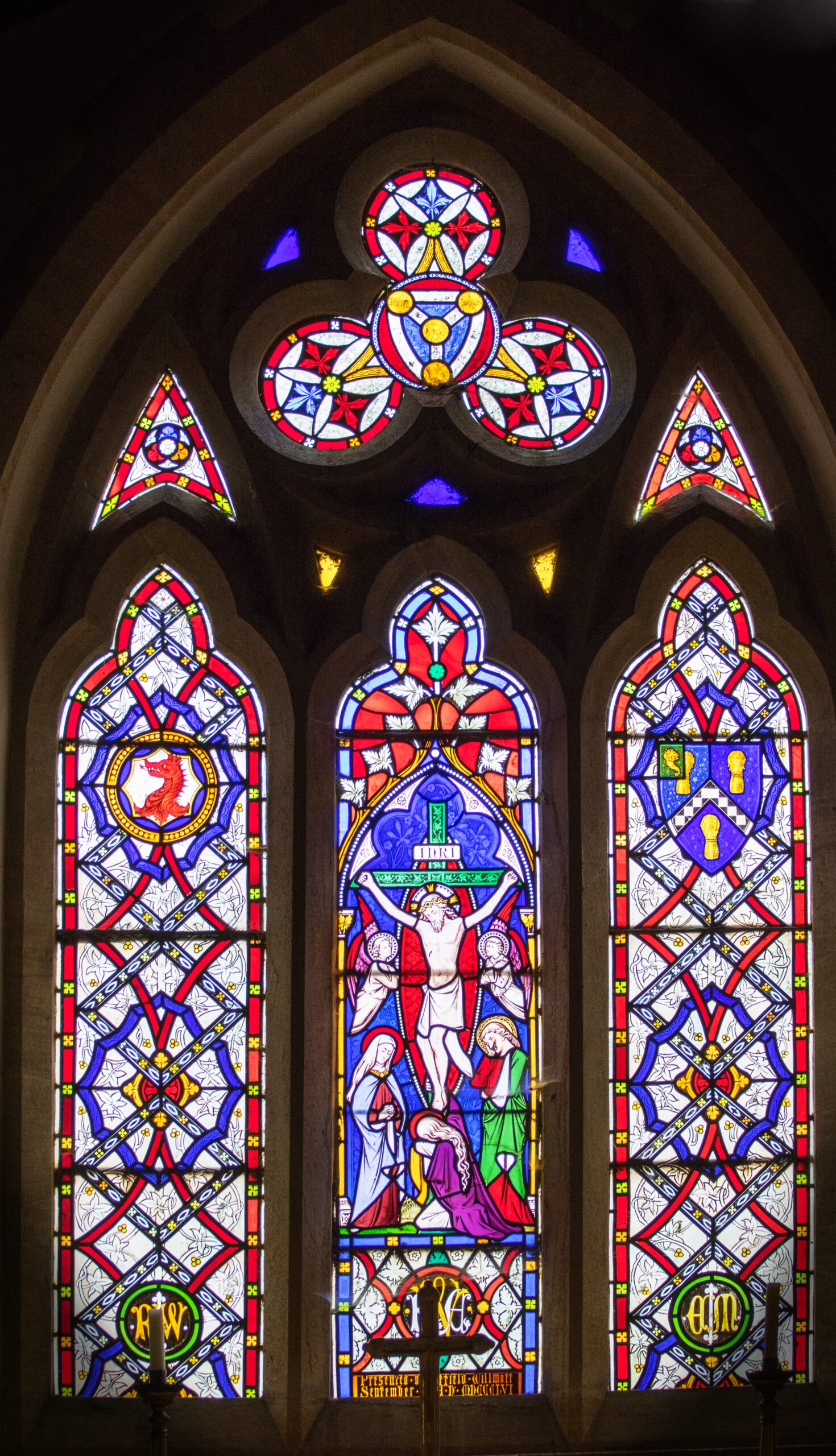
To commemorate their marriage, Effield presented Caundle Marsh church with an east window made by the firm of N.W. Lavers of London. The central light of the window depicts the Crucifixion, below which are the combined initials ‘RWE’ [Robert Willmott Effield] and the inscription ‘Presented by Effield Willmott, September. 10, A.D., MDCCCLVI’. In the side panels of the window are the Willmott family crest of a dragon’s head and the initials ‘RW’ [Robert Willmott] and the Messiter family crest and the initials ‘EM’ [Effield Messiter].[14]
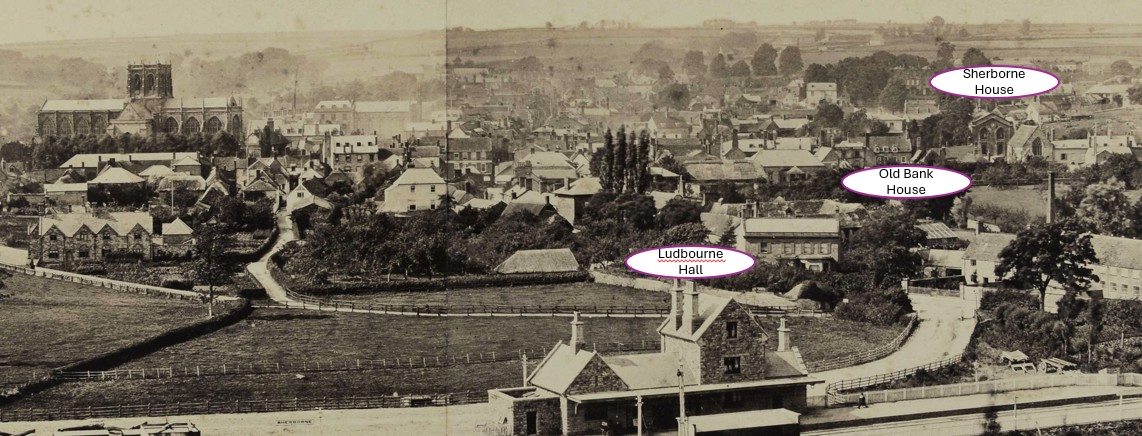
In 1849, Robert Willmott had purchased Ludbourne Hall in South Street [then known as Duck Street or Market Street], Sherborne[15], and it was to this smart townhouse that in September 1856 he brought his new bride.
Today, South Street is seen as a pleasant and respectable area of Sherborne, but an inspection of the town carried out in September 1849 by G.T. Clark, Superintending Inspector to the General Board of Health, paints quite a different picture of the area:
‘The common sewer passes through the street, in the centre, and a deep covered gutter under the footwalk on the western side, which latter often requires to be thoroughly cleansed by a stream of water running from a pond in the Abbey; it should be done for two hours every evening, after six o’clock, but it scarcely ever is properly cleansed by a full and powerful stream therefrom, except on Saturday evenings, and then but seldom thoroughly.’[16]
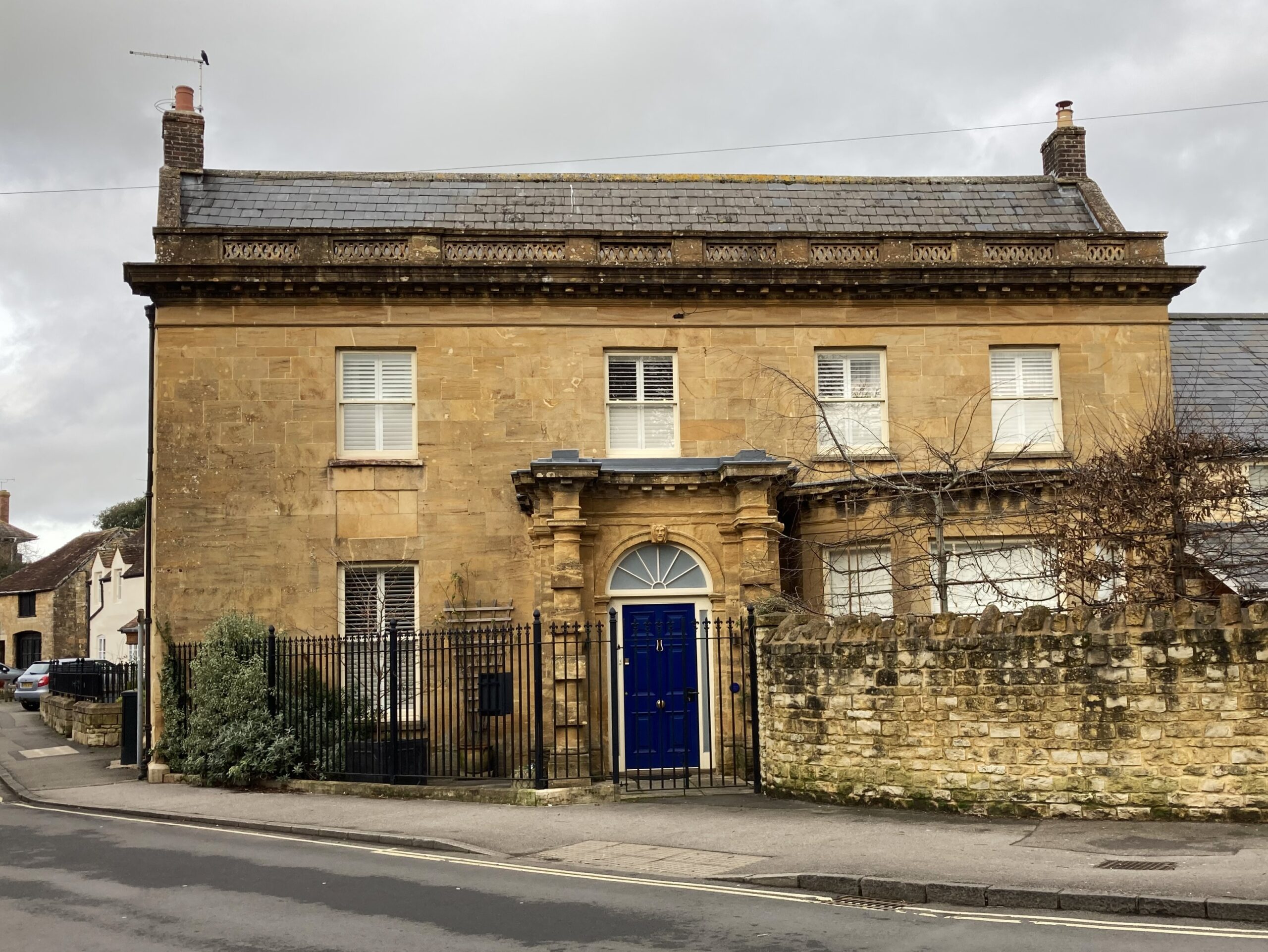
Aged just 22, Effield was now expected to run Robert’s home, taking responsibility for the household budget, servants, and menus. It was at Ludbourne Hall that Effield first practised her skills as a hostess. As the wife of a wealthy businessman, she needed to maintain and enhance her husband’s social status, entertaining his clients, friends and family, as well as paying social visits, attending dinners and parties, being seen at Abbey services, and supporting local ‘good causes’.
An insight into the social whirl of Effield’s first year of married life is provided by the diaries of Charles Morgan (1796-1857), a wealthy Welsh landowner who moved to Sherborne in 1850 and lived at Greystones in Newland[17]:
- 6th January 1857: Miss James calls to ask us to dine on Friday and meet the bride, Mrs Rob W.
- 9th January 1857: Get out about 4.00 to order fly to Johnson’s to take us to dine at Mr James at 6.00 and take up Mrs Goldsmith. Meet Miss Williamson, Mrs Robert Wilmot the bride, Mr Henning, Mr Lyon and Mr Robert Wilmot; in all 12 at dinner. A pleasant party, very sociable.
- 14th January 1857: Tea at 7, Charles, J and Em and Ag at a party at Mr Wilmot’s. Go in Johnson’s fly after Mrs Marten has gone, not to pay full price.
- 16th January 1857: Get to Mr Henning’s and meet Carree at a splash party at Mrs Fussell’s. The bride Mrs Robert Wilmot there, Mr and Miss McCready etc singing etc. Home at 12.00.
- 3rd February 1857: Mr R Wilmot calls, Mrs W not able to come this evening, excused. Party goes off pretty well, tho’ many disappointments of people and things. Mrs Bennett and Mr James, Miss McCready, Robert Wilmott cum multis aliis. Singing the order of the evening in which our own children are a part and do pretty well.
- 9th February 1857: Mrs Robert Wilmot calls and Mrs Palairet.
- 10th February 1857: After dinner walk with Carree and Agnes to the Park. Wet and muddy. Tried the hill Gainsborough, meet Robert and Mrs Wilmot, very nice young man and wife, and home by Duck St.
- 13th February 1857: Walk with John to the Sisters in the park, a constitutional walk. Meet the Fussels (and Robert and Mrs Effie Wilmot call) returning from call at the Castle.
Four and a half years after their marriage, when the 1861 census was taken on the evening of Sunday 7 April 1861, we find ‘Effielda’ Willmott, aged 27, living at Ludbourne Hall with her 46-year-old husband Robert Willmott, a 24-year-old married visitor named Florence Caddy[18], and two live-in servants, Mary Brown and Jane Burt. But no children.
On 7 May 1860, the railway line linking Sherborne to London was officially opened at 6:30 am when the first train departed from the newly built railway station in the Digby Road, just a short distance away from Ludbourne Hall. The building of the railway line had necessitated the demolition of East Mill, a silk throwing mill owned by the Willmott family, and the canalisation of the river Yeo at the bottom of South Street.
The arrival of the railway inevitably made South Street much busier and may account for why on 20 July 1861 Robert Willmott, with the consent of George Digby Wingfield Digby (1797-1883) of Sherborne Castle, decided to take over W.C. Macready’s lease of Sherborne House in Newland.[19] The actor-manager William Charles Macready (1793-1873) had on 6 November 1849 signed a 21-year lease for Sherborne House,[20] but this was not to be the happy retirement Macready had anticipated and, after the death of his first wife and several of his children, he left Sherborne at the end of March 1860 and on 3 April 1860 married Cecile Louise Frederica Spencer (1827-1908) and moved to Cheltenham.

Sherborne House was built to impress, with its grand staircase painted by Sir James Thornhill (1675/6-1734), imposing and beautifully proportioned rooms, carriage sweep, stables, and prominent position overlooking the town. It was also, after Sherborne New Castle, the largest private dwelling in the town.
By moving to Sherborne House Robert and Effield were making a bold statement about their economic and social status. But Sherborne House was not only a place to entertain clients and friends, but also a family home, and Robert soon set about modernising the property to make it more comfortable, installing boilers and gas pipes, and a kitchen range supplying hot water to all parts of the house.[21]
Two years later on the 12 May 1863, Robert took out a further 19-year lease of Sherborne House.[22] Effield was then 29 years old, and she and Robert must have still hoped that Effield might become pregnant. In the light of this, an advertisement placed four years later by Effield in the Western Gazette newspaper makes particularly poignant reading: ‘WANTED, a good PLAIN COOK, in a Family where there are no children; must have lived in a gentleman’s house before. No kitchen-maid kept. Apply to Mrs WILLMOTT, Sherborne House, Sherborne, Dorset.’[23]
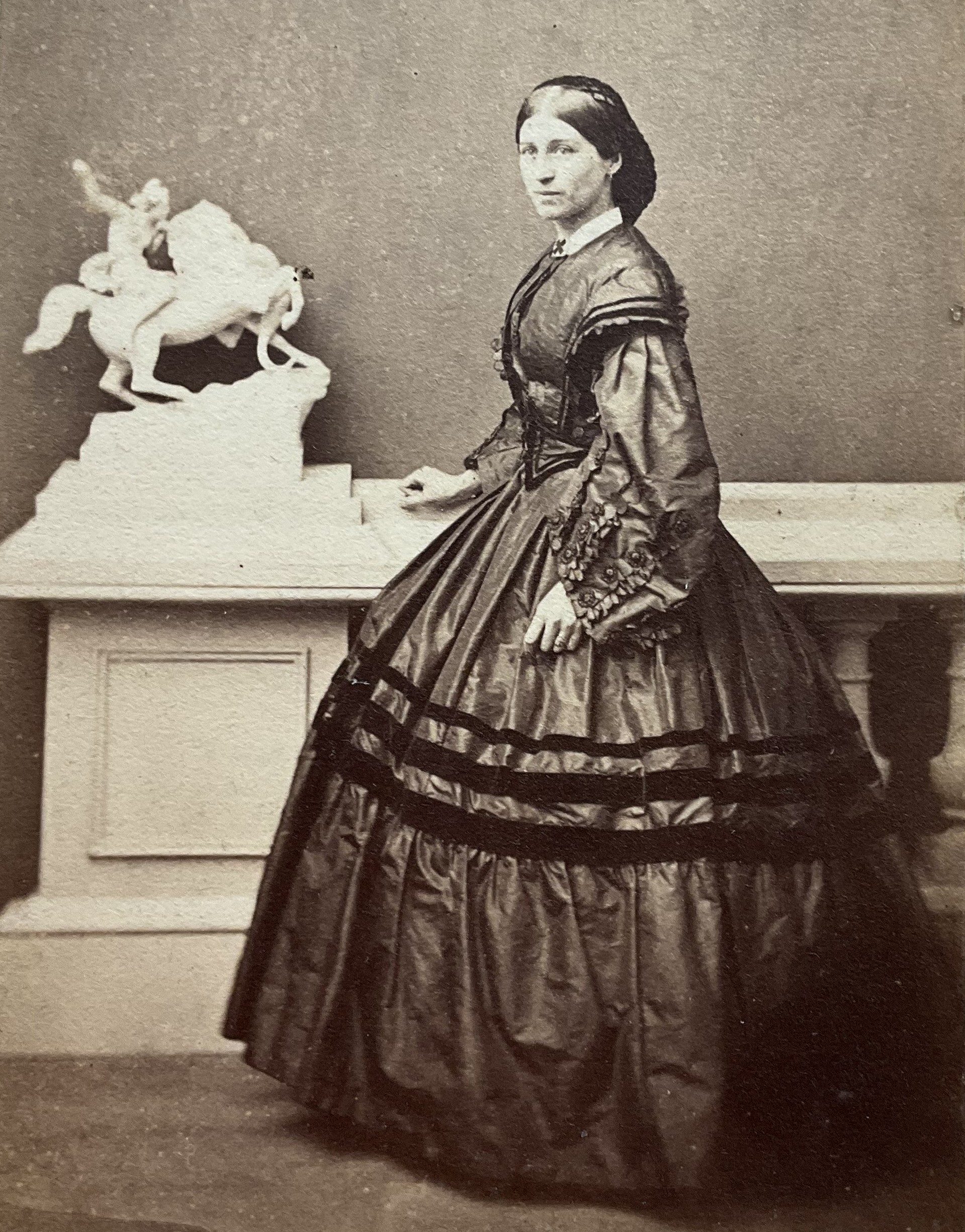
Cartes de visite had been introduced to England in 1857 and were popularised in 1860 when Queen Victoria and Prince Albert had their carte portraits taken.[24]The discovery of a carte de visite photograph of Effield in the archives of the Henning family of Newland House, Sherborne (ref. D-HNG)[25] provides us with a tantalising glimpse of Effield at this time, with her direct gaze, slight smile, and confident posture. Although undated, everything about Effield’s carte portrait suggests it was taken in the mid-1860s when she would have been about 30 years old.
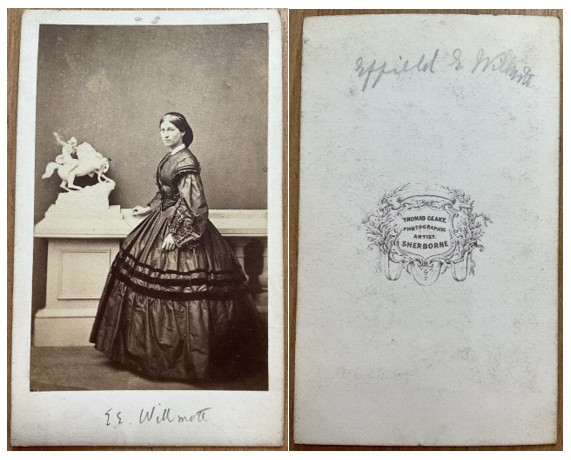
Effield’s carte portrait was taken by Sherborne photographer Thomas Geake (1822-1870). From 1857 to 1866[26] Thomas Geake had a photographic studio in Long Street (the premises later becoming the Sherborne Coffee Tavern and more recently Gilyard Scarth estate agents)[27] where this photograph was probably taken in his ‘glass house for taking portraits’.[28] The portrait is mounted on a square-cornered card, a style in use in the 1860s,[29] and with the identities of so many carte portraits unknown, we are fortunate that someone has written on the back of the card – ‘Effield E. Willmott’.
The background and props in Effield’s carte portrait are of a simple, classical style, fashionable in the mid-1860s.[30] Effield is resting her hand on a balustrade at the end of which is a plinth with a plaster cast of August Kiss’s statue of ‘The Mounted Amazon Attacked by a Panther’. The original of the statue, which features a female Amazon warrior on horseback fighting off a panther, was installed in 1837 outside the National Museum in Berlin.[31] Might this be Effield’s way of communicating to the viewer that she is a cultured and educated woman? It also poses the possibility that she may have visited Berlin and seen the original statue.
Effield’s appearance in the carte portrait is elegant, fashionable and carefully curated to reflect her social and economic status. Her smooth hair is parted simply in the centre and pulled into a low bun which is covered by a hairnet or snood probably made from silk chenille. From her ears, which are exposed in a style that had become fashionable by the mid to late 1860s,[32] hang delicate drop earrings. Other visible jewellery includes two rings on the fourth finger of her left hand and in the centre of her collar is a brooch with a cross design. She is wearing a fashionable day dress, with a fitted corseted bodice and a bell-shaped skirt supported by a cage crinoline of steel hoops. Her dress is probably made from silk taffeta, which has a sheen and a crisper texture than silk, trimmed with black velvet and a white collar. The epaulettes on her shoulders are also trimmed with black velvet and the wide cuffs of her full sleeves are elaborately trimmed with glass or jet beads and frills. [33] As the wife of a wealthy silk throwster, Effield’s dress can be seen as not only a public display of her husband’s wealth and social status, but also of his stock in trade![34]
It was about this time that the heroic figure of Major Andrew Cathcart Bogle VC (1829-1890) entered the lives of Robert and Effield Willmott – a man who would go on to play a significant role in Effield’s life.

Andrew Cathcart Bogle was born in Glasgow on 20 January 1829, the second of six children born to a wealthy merchant Archibald Bogle (1796-1858) and his wife Janet Bogle (1803-1838), who lived at Gilmorehill in Glasgow. Andrew’s mother died when he was nine years old, possibly from tuberculosis, but his father never remarried.
In common with his brothers, Robert Bogle (1826-1857), Archibald George Bogle (1832-1903) and Michael James Bogle (1835-1908), Andrew attended Cheltenham College.
On 28 December 1849, just before his 21st birthday, Andrew joined the 72nd Highlanders as an ensign by purchase, and the following year on 15 February 1850 transferred to the 78th Highlanders with whom he served with distinction in the Anglo-Persian War (1856-57) and the Indian Mutiny (1857-59). During the Indian Mutiny (1857-59) he was the first of the eight officers and men of the 78th Highlanders to win the Victoria Cross, for which his citation read:
‘For conspicuous gallantry on 29 July 1857, in the attack on Oonao, in leading the way into a loop-holed house strongly occupied by the enemy, from which a heavy fire harassed the advance of his regiment. Captain Bogle was severely wounded in this important service.’ [35]
Andrew’s pride at being awarded the Victoria Cross must have been tinged with great sadness when his elder brother Captain Robert Bogle (1826-1857), who was also serving in the 78th Highlanders, died on 19 November 1857 of wounds received at Lucknow on 26 September 1857.[36]
In 1845, Andrew’s father Archibald Bogle (1796-1858) sold the family home at Gilmorehill, Glasgow,[37] and moved to Cheltenham, where he died on 26 March 1858 at Clarence House, Imperial Square, leaving Andrew heir to a sizeable fortune. Despite his inheritance, he remained in the army, being promoted on 31 August 1859 to Captain of the 10th Foot by exchange, to Brevet Major on 25 April 1859, and finally retiring on 22 August 1868 as Major, 23rd Foot.
We cannot be certain what first brought Major Bogle to Sherborne, but it is possible that the local Blackmore Vale Hunt played a part, of which he became a member and regularly attended their meets.[38] Major Bogle’s interest in hunting and horses may also account for his purchase on 24 December 1871 of the Antelope Hotel on Greenhill[39], on ground at the rear of which he later built a substantial range of stabling with five loose boxes, two coach houses, and a house for a coachman.[40]
Like Robert and Effield Willmott, Major Bogle enjoyed socialising. In a newspaper report published in January 1866 about the first county ball to be held in Sherborne for many years, we find included in a list of attendees the names of both Major Bogle and Robert and Effield Willmott.[41] Thereafter Major Bogle and Robert and Effield’s names appear regularly together in newspaper reports of social events held both in Sherborne and as far away as Weymouth. Sherborne House must also have been a wonderful venue for parties where Major Bogle and other guests would have enjoyed Robert and Effield’s hospitality.
The rise in Robert and Effield’s social status is indicated by the 1871 census for Sherborne House, which was taken on the night of 2 April 1871 and lists amongst the live-in household servants a footman Henry Coombs (aged 18), a lady’s maid Jane Butt (aged 20), and two housemaids Mary Paton (aged 23) and Jane Pearce (aged 22).
On 10 September 1875, Robert and Effield celebrated their 19th wedding anniversary. Despite having no children, their marriage appears to have been a happy one, but Robert had begun to suffer from poor health. On 30 November 1875 Robert was taken ill and for the next thirteen days he lay in bed suffering from extreme debility and nervous prostration, but despite the best medical care he died at Sherborne House shortly after noon on Sunday, 12 December 1875. His cause of death was certified by Dr William Highmore MD as a haemorrhage from the left lung and albuminuria.[42] He was 61 years old and Effield was left a widow at 51.
Major Bogle had by now become a trusted family friend of the Willmott’s and his attendance at Robert’s funeral would have been expected. As was customary at the time, Effield did not attend Robert’s funeral, but she would have watched the funeral cortege as it left Sherborne House at 2.30 pm on 17 December 1875. In the first mourning coach were Robert’s nephew and partner in his silk throwing business Albert Willmott (1840-1888), with Effield’s father the Rev. Richard Messiter (1800-1885), and Sir Brook Kay (1821-1907) the husband of Robert’s niece Eliza Willmott (1831-1917); in the second mourning coach were Effield’s brother-in-law Thomas Harrison Wayne (1827-1879), Major Bogle, and the family solicitor Mr Ffooks; and in the third mourning coach were Dr William Highmore MD, and solicitor Mr Benjamin Chandler.
Robert had been a well-known and respected figure in the town, not only as an employer of over 400 men, women and children, but also as a Governor of Sherborne School and one of the Brethren of Sherborne Almshouse. His funeral therefore attracted a lot of interest, with the route from Sherborne House to the Abbey lined with spectators and the blinds of the shops drawn as a mark of respect. At the Conduit at the bottom of Cheap Street, 100 female employees from the silk factory headed by the forewoman Miss Whiffin, joined the cortege and followed it for the remainder of its journey along Half Moon Street to the Abbey churchyard where the path to the Abbey was lined by the Brethren of the Almshouse and masters of Sherborne School. Robert’s coffin was carried into the Abbey by six workmen from the silk factory[43] and his remains were interred in the Willmott family vault.
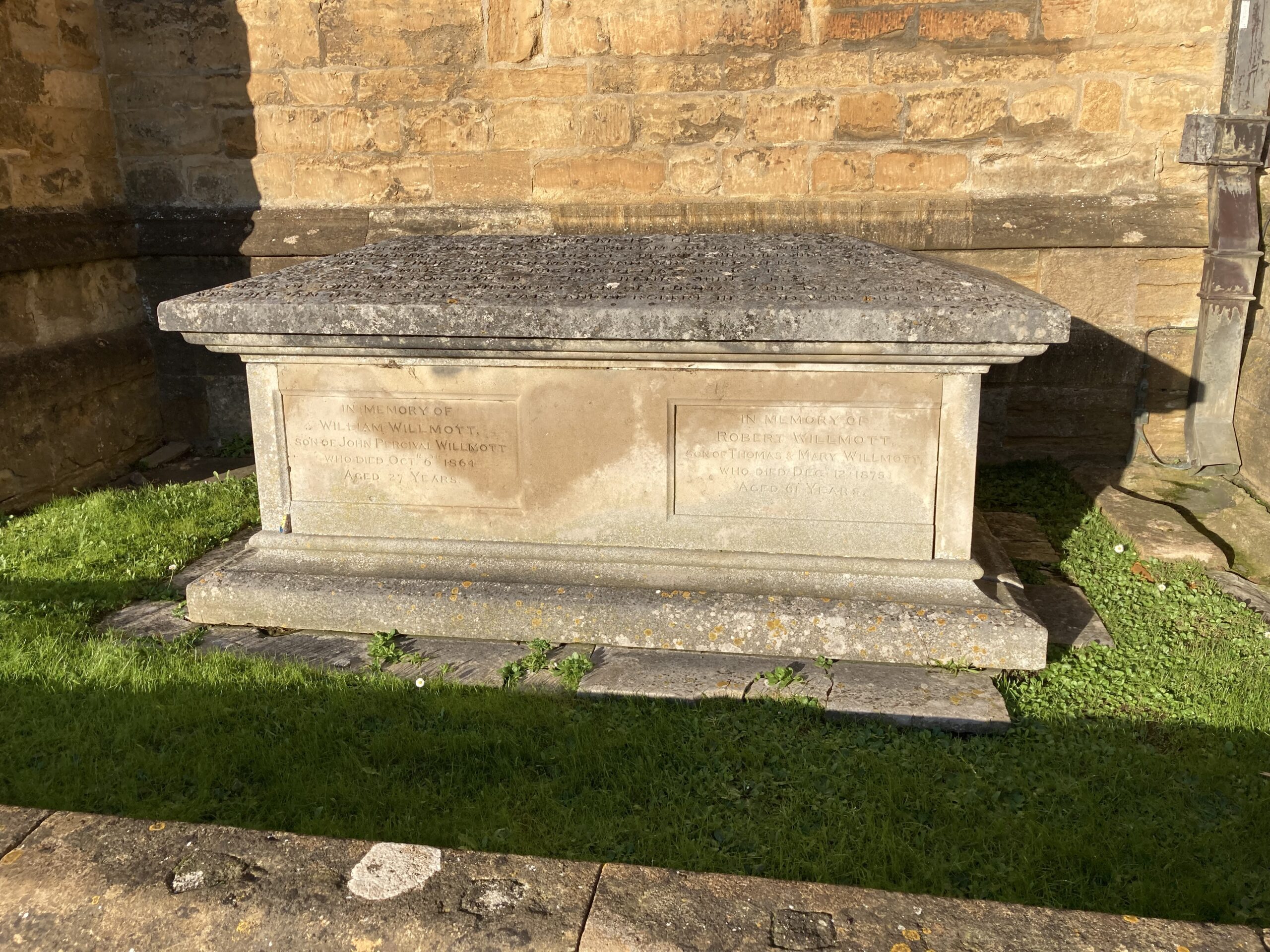
By his will, made at Sherborne House on 27 January 1869, Robert ensured that Effield was taken well care of. He left to her his ‘household goods, musical instruments, furniture, plated goods, clocks, watches, trinkets, linen, china, glass, books, paintings, prints, wine and other liquors, horses, carriages and harness, and £50 to be paid in one month and £150 in three months after my decease.’ He also left to Effield, ‘for her widowhood’, the lease of Sherborne House and the rents from the thirty cottages (Terrace View) he had built in Horsecastles, which if she remarried should revert to Robert’s nephew and partner in his silk throwing business Albert Willmott (1840-1888).
However, Effield did not remain a widow for long, and on 19 December 1876, just one year and a week after Robert’s death, Effield married Major Bogle. The marriage banns were read in Sherborne Abbey but, possibly for the sake of propriety, the wedding took place at South Warnborough in Hampshire, the home of Effield’s sister Emma (1839-1924) who had married Thomas Harrison Wayne (1827-1879). The wedding was conducted by Effield’s father and witnessed by Major Bogle’s sister Mary Bogle (1827-1894) and his brother Rear-Admiral Archibald George Bogle (1832-1903), which suggests that both families approved of the union. Effield was now aged 42 and her new husband was 47.
After their marriage, Major Bogle and Effield returned to live at Sherborne House. An agreement seemingly having been reached with Robert’s nephew Albert Willmott allowing Effield to remain in Sherborne House after her remarriage. Prior to their marriage, Major Bogle had already begun to help Effield run Sherborne House, as is revealed by a Court Summons issued against Major Bogle in December 1876 by James Upsall, a plumber and glazier who had been employed on 8 December 1876 to clean out the best water closet at Sherborne House. An argument arose between Major Bogle and Upsall when Upsall failed to call in at the Antelope Hotel for instructions from Major Bogle on how to carry out the work, which ended in Upsall calling Major Bogle an ‘infernal liar’ and Major Bogle punching him.[44]
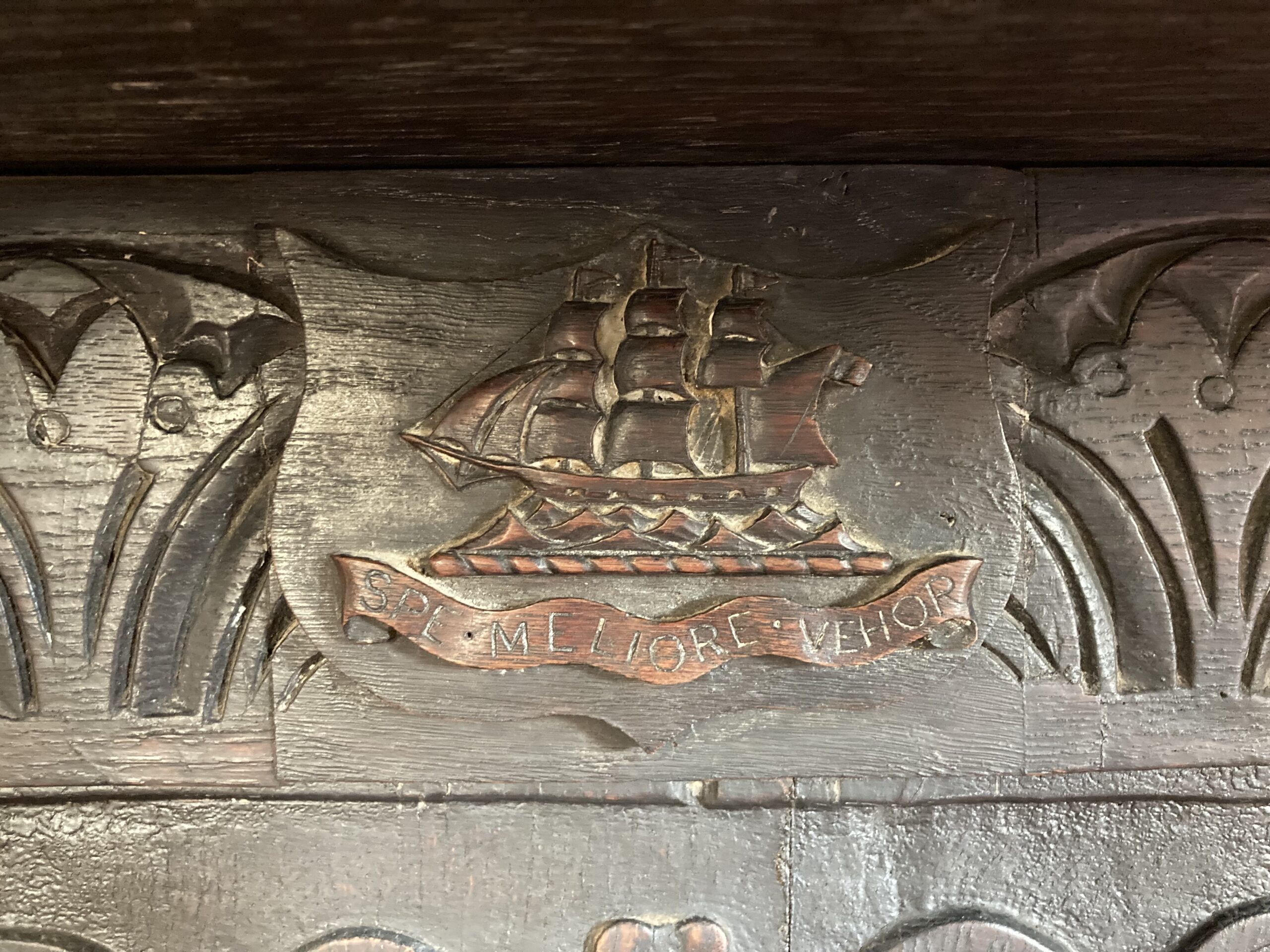
Amazingly, traces of Major Bogle’s residence at Sherborne House can still be found. The Bogle family motto ‘Spe Melior Vehor’ [I am borne along by a better hope] below the crest of a ship in full sail[45] can still be seen on the wooden fire surround in the Dining Room at Sherborne House.
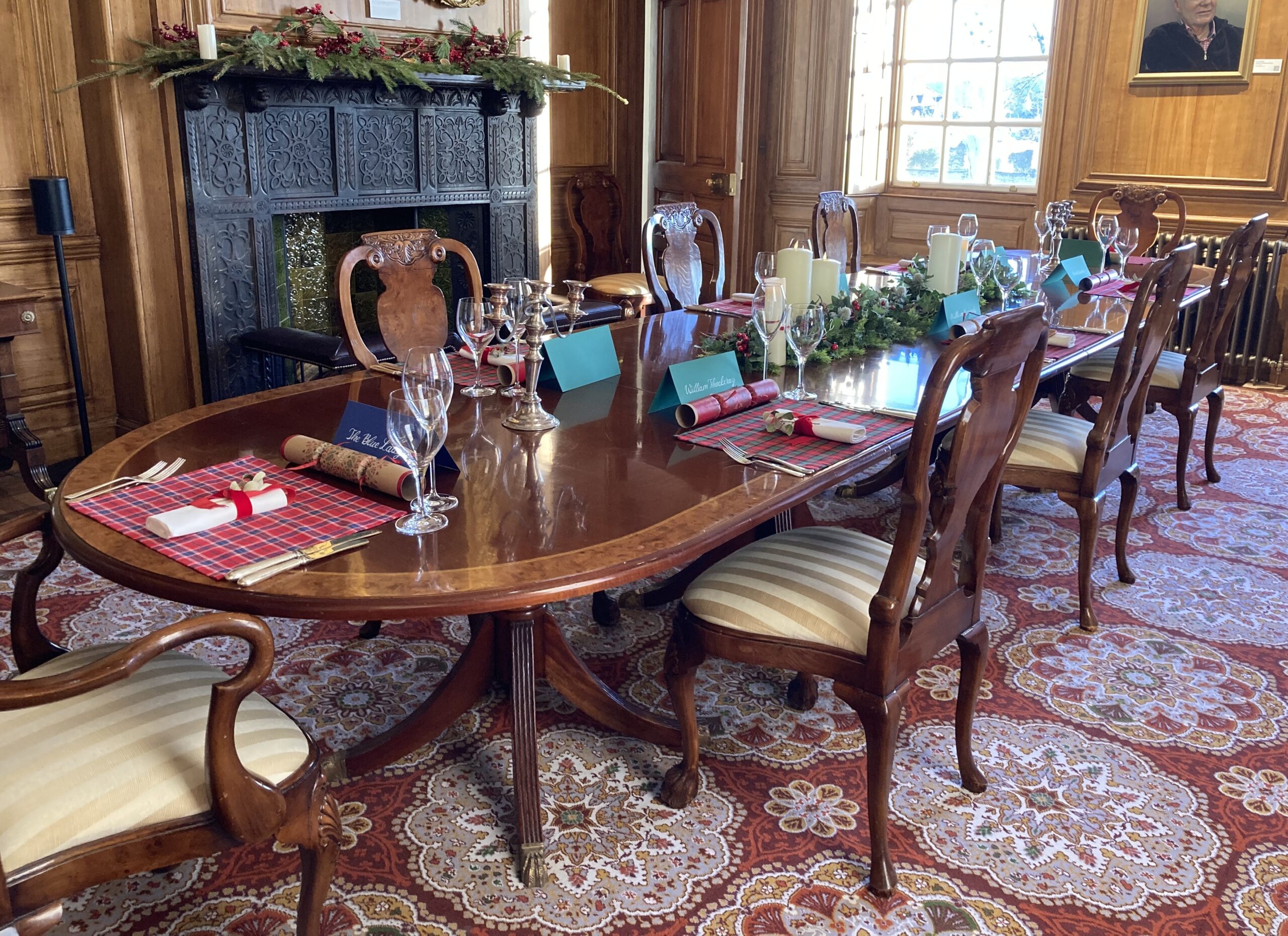
And on the opposite side of the entrance hall in what would have been the Drawing Room, the Saint Andrew’s Cross or Scottish Saltire is carved into the wooden fire surround.


It is possible that these fire surrounds were removed from the Bogle family home at Gilmorehill in Glasgow which Major Bogle’s father sold in 1845.[46] The decision to re-locate the fire surrounds in the Dining Room and Drawing Room at Sherborne House suggests that these were rooms where Major Bogle and Effield did a lot of entertaining and where Major Bogle’s status and heritage could be shown off to visitors.
Marriage to Major Bogle was never dull, for he was surprisingly litigious! He evidently had a very strong sense of justice, as already proven by his argument in December 1876 with James Upsall. In 1877 he became involved in an argument with the Sherborne Board of Health over their insistence that he should fit cisterns with proper flushing apparatus in the row of thirty cottages (Terrace View) in Horsecastles, the rents from which Robert Willmott had bequeathed to Effield.[47] The case rumbled on and on, with the Board of Health eventually fitting the cisterns themselves, but when Major Bogle refused to pay their costs they took him to court and in December 1879 the case was brought before the Queen’s Bench in what was viewed as a test case of the powers of the Local Boards of Health.[48]
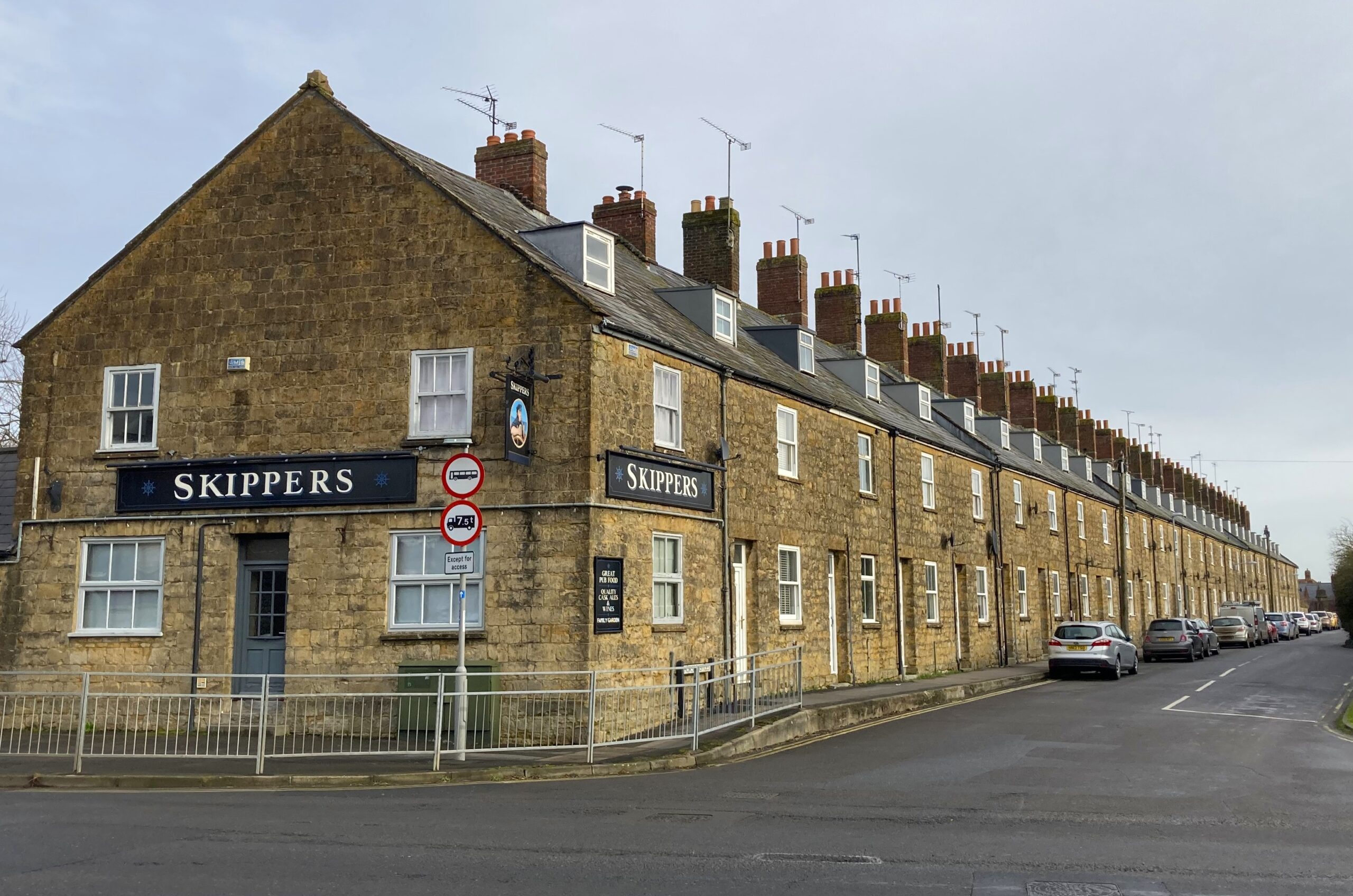
Relations between Major Bogle and the Sherborne Board of Health remained confrontational and when on 11 January 1887 he produced a pistol at a Board meeting he was summoned before the police court. Major Bogle decided to represent himself and, having assured the Bench that his sole object in carrying the pistol was to take it to the gunsmith’s, the case was dismissed to much applause in the court room and the ‘gallant Major’ was greeted outside by a cheering crowd, suggesting he enjoyed a degree of popularity in the local community.[49]
Effield’s father died at Caundle Marsh Rectory on 15 May 1885 and was buried on 22 May 1885 at the Caundle Marsh church. Again, according to custom, Effield did not attend the funeral but was represented by Major Bogle. Two years later on 18 June 1887 the family assembled again at Caundle Marsh church for the funeral of Effield’s mother.
It was about this time that Major Bogle began to suffer from symptoms associated with heart disease, which proved fatal on 11 December 1890 when he died at Sherborne House from an aneurism of the thoracic aorta. Major Bogle’s death at Sherborne House, 15 years minus one day after that of Robert Willmott, left Effield widowed again, at the age of 56.
By his will Major Bogle requested that his funeral should be ‘as plain and quiet as possible’, and in all respects it was much less of a public spectacle than Robert Willmott’s funeral had been. In accordance with his wishes, on 16 December 1890 his body was taken from Sherborne House to Woking for cremation.[50] Effield sent a floral wreath but did not attend the service, during which the great bell at Sherborne Abbey was tolled.[51] On 14 February 1891 Major Bogle’s ashes were interred in the Bogle family vault at St Lawrence’s, Effingham, Surrey.[52]
Major Bogle left a personal estate of £57,186 (resworn in July 1891 at £56,939), which today would be worth nearly £5 million. By his will made on 27 June 1897 Major Bogle ensured Effield would be financially secure, leaving to her, ‘for her own benefit’, the leasehold of Sherborne House, together with all the ‘plate and plated articles with the Willmott Crest’ (which had become Major Bogle’s property on his marriage to Effield), the ‘furniture, linen, china, glass, books, prints, musical instruments, clocks and other articles of household use or ornament’, and all his ‘horses, carriages, saddlery, harness and stable furniture, live and dead stock, tools, implements and utensils, wines, liquors and household stores and provisions.’
Major Bogle also left Effield an annuity of £1000 to be paid by equal quarterly payments on the four quarter days, the first payment to be made in full on the quarter day next after his death. To his brother Rear-Admiral Archibald George Bogle (1832-1903) he left all the ‘family plate, plated articles, gold, pencil cases, watches, diamond, buckles and pictures which originally came from Gilmore Hill formerly the family residence in Scotland, all my plate and plated articles with the Bogle Crest, my sword and medals’ and also the medals that had been presented to their brother Captain Robert Bogle (1826-1857).
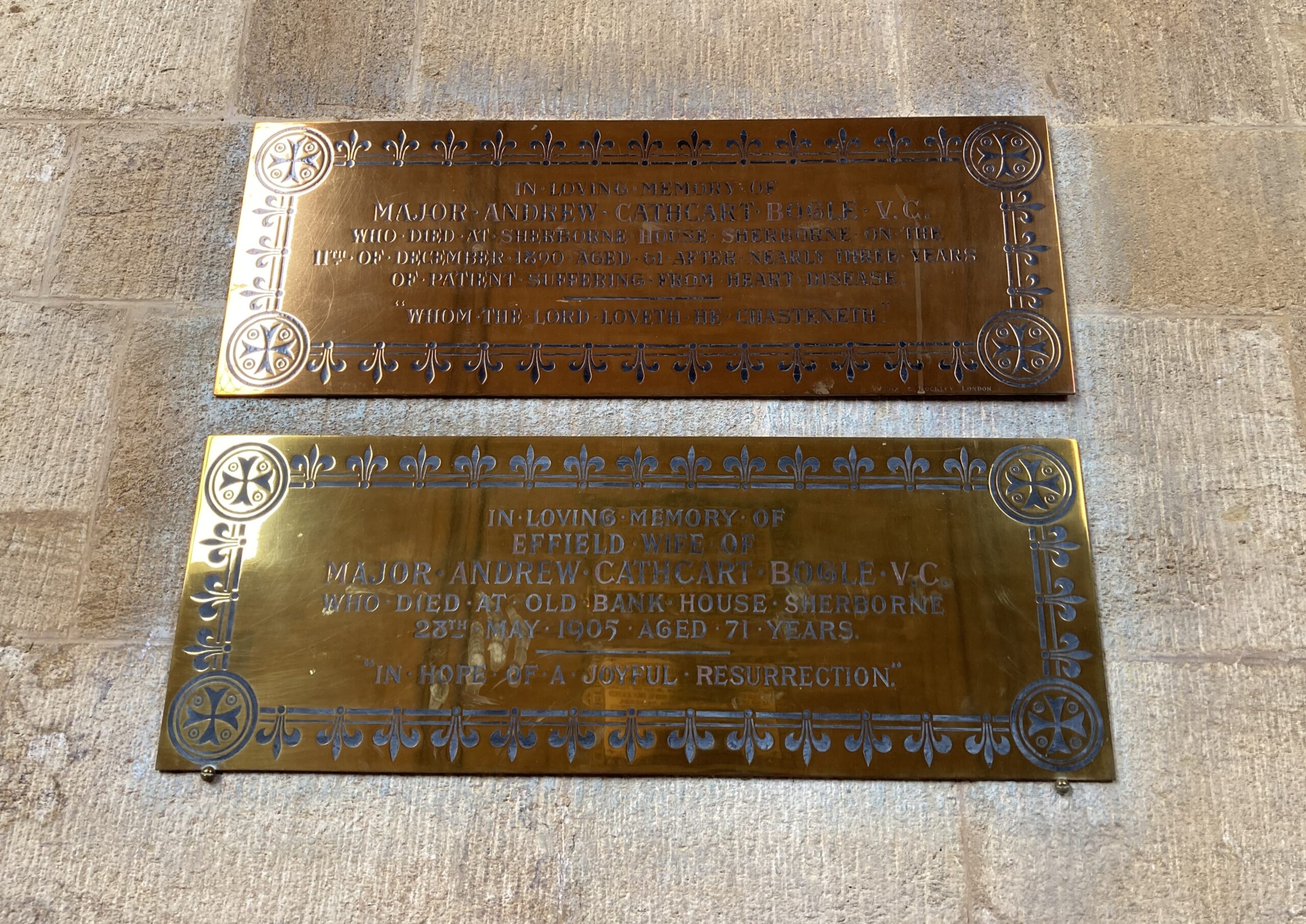
In Major Bogle’s memory, Effield erected a brass wall plaque in the south choir aisle of Sherborne Abbey bearing the inscription, ‘In loving memory of Major Andrew Cathcart Bogle, V.C., who died at Sherborne House, Sherborne, on the 11th of December, 1890, aged 61, after nearly three years of patient suffering from heart disease. Whom the Lord loveth He chasteneth.’
Effield was now a wealthy woman in her own right and for the first time in her life was able to buy a home of her own. At an auction on 27 April 1891 she purchased Lot 6 for £1,260.[53] Lot 6 comprised Benjamin Chandler’s former home the Old Bank House in Long Street, Sherborne, which was described in the sale particulars as: ‘All that very desirable freehold dwelling house, with the outbuildings, large productive garden, and well-arranged lawns, fountain, and terrace thereto belonging, situate in Long Street aforesaid, and known as The Old Bank, for many years in the occupation of Mr B. Chandler. The dwelling house, which commands extensive and charming views, contains: on the ground floor: dining room, 23ft x 14ft facing south, with mullioned bay window; library, 14ft x 14ft; china pantry, 26ft x 10ft, portion of which could be easily converted into a breakfast room; oak staircase; entrance hall; corridor; lobby and stairs, leading to lavatory and capacious wine cellars; 2 kitchens, 17ft x 18ft; with coal cellar and larder adjoining; scullery, with furnace; outer larder and stores. On the first floor: drawing room, 21ft x 16ft; small drawing room adjoining; 7 large bedrooms; corridors; housemaid’s sink; W.C. & c. On the second floor: four bedrooms; 1 dressing room; and large storeroom. The lawns are most tastefully laid out, and the garden, shrubberies, and gravelled walks in thorough order.’
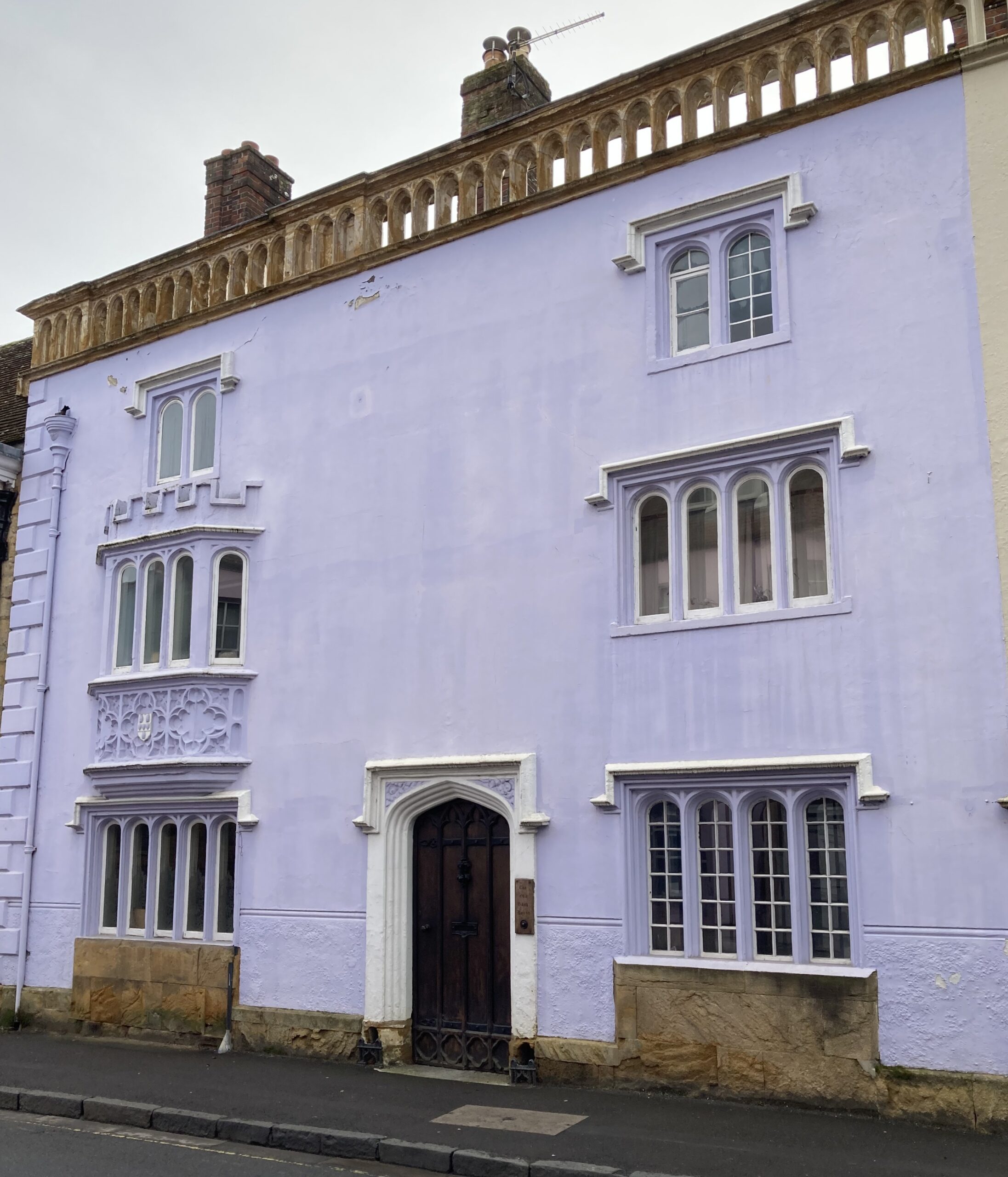
Still only in her late 50s, Effield continued to maintain her reputation as a wonderful hostess, opening the Old Bank House to ‘good causes’, including a meeting of the Dorset Needlework Guild in October 1893, a tea party for forty inmates of the Sherborne Workhouse in September 1894, and a fundraising fete for the Church of England Young Men’s Society in July 1896. Her garden was beautifully maintained by Mr Baker, who had moved with her from Sherborne House and in March 1894 he proudly exhibited at a meeting of the Sherborne Gardeners’ Mutual Improvement Society her fine specimen of Coelogyne Cristata (a cold growing orchid from the Himalayas) carrying 18 blooms, and in October 1895 he announced that he had harvested in her garden a second crop of raspberries, strawberries and gooseberries.
She also continued to support Sherborne Abbey, to which she presented a frame for displaying hymn numbers and a handsome ewer for the font; and the Yeatman Hospital, which her first husband Robert Willmott had helped found, where she served as a life governor and gave an annual contribution of £5 in Robert’s memory. On 27 September 1898, the Rev. Robert Bamford, Effield’s next-door neighbour at Lynton House (now Abbot’s Litten) in Long Street, organised a fundraising bazaar for the Yeatman Hospital at the Digby Hotel Assembly Rooms, which was opened by Princess Victoria, wife of Prince Louis of Battenberg.[54]
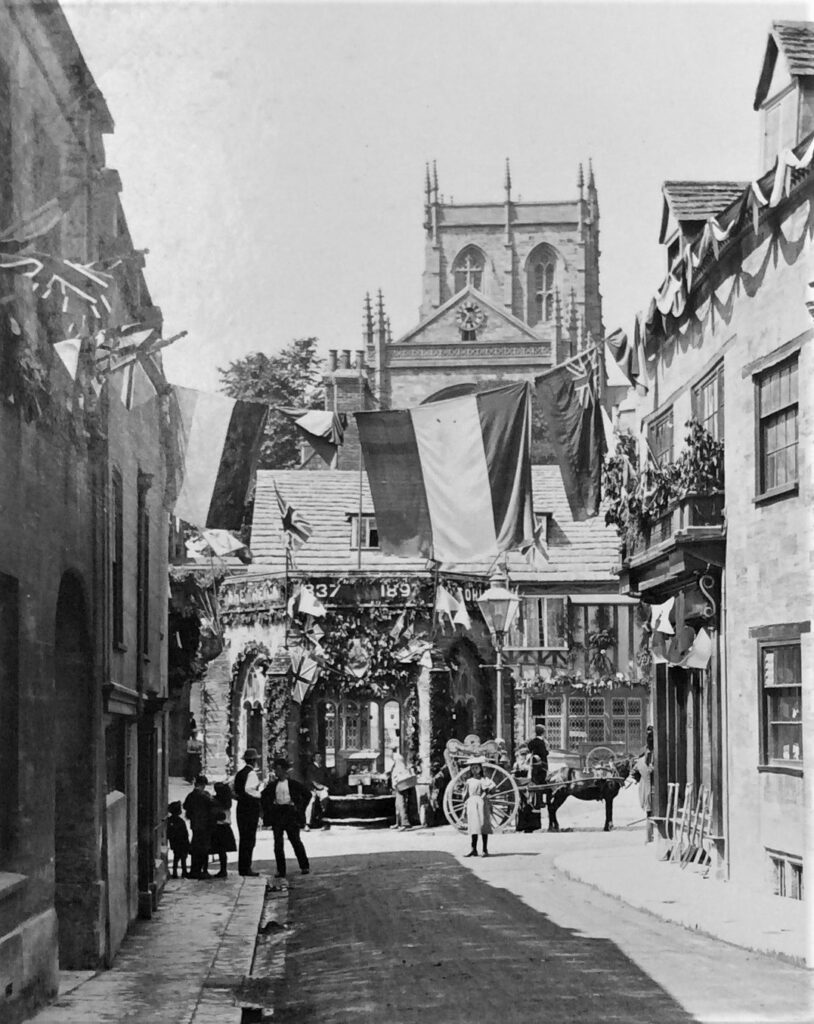
Effield was three years old when Queen Victoria ascended to the throne on 20 June 1837. Sixty years later in 1897 her diamond jubilee was celebrated throughout the British Empire. At Sherborne a service of thanksgiving was held in Sherborne Abbey on 20 June 1897, and a day of celebrations was held in the town on 22 June 1897, beginning at 6 am with the pealing of the Abbey bells and the firing of canon on the Terraces, followed at 11 am by a procession through the streets, and ending in the evening with a Jubilee bonfire.[55]
When the census was taken on the evening of Sunday, 31 March 1901, we find ‘Effie’ Bogle living at the Old Bank House with her younger unmarried sister Margaret Messiter, and three live-in servants: Margaret Graham, a 24 year old parlour maid, and Agnes Graham, a 22 year old cook, both from Langholm in Dumfries and Galloway, and Ethel Norman, a 19 year old housemaid from Shepton Mallet.
Effield had led a privileged life and appears to have avoided the epidemic diseases associated with the nineteenth century. However, in 1902 she became seriously ill with an unspecified illness and must have spent time in the Yeatman Hospital because on her recovery she presented the hospital with £50.
Family remained important to Effield throughout her life. She was close to all her sisters, with her unmarried sister Margaret living with her for a time at the Old Bank House. She also kept in touch with Robert’s nephews and nieces, and with Major Bogle’s relatives, including Claudine Cordelia Emma Scott (née Coxe) (1849-1926), the widowed wife of Major Bogle’s cousin, and her teenage daughters who came to live at North Syde (now Bute House) in Long Street in the 1890s and introduced Effield to the world of competitive women’s archery.[56]
On 6 February 1900 Effield made her will, appointing as her executors two of Major Bogle’s relatives, Mabel Scott (1869-1934) and Archibald Elphinstone (1865-1936), and asking her next-door neighbour Mrs Blanche Bamford (1856-1936) of Lynton House and Isabel Johanna Auber of Wood Vale, Parkstone, Dorset, to act as witnesses. Mabel Scott was with Effield when five years later she died at the Old Bank House on 28 May 1905. Her cause of death was certified by Dr J.F.L. Whittingdale as broncho-pneumonia, 10 days.
On 2 June 1905 a quiet funeral, with no flowers by request, was held at 8 o’clock in the morning in Sherborne Abbey. After the service Effield’s body was conveyed to Woking for cremation, and on 29 June 1905 her ashes were interred with Major Bogle’s in the Bogle family vault at St Lawrence’s, Effingham, Surrey, where the following inscription now marks their grave:
‘Sacred to the Memory of MAJOR ANDREW C. BOGLE, V.C. SECOND SON OF ARCHIBALD BOGLE, BORN 20 JANUARY 1829, DIED AT SHERBORNE, 11 DECEMBER 1890, AGED 61. ALSO OF EFFIELD, HIS WIFE, WHO DIED AT SHERBORNE, MAY 28TH 1905, AGED 71 YEARS.’
Effield’s choice to be cremated and her ashes interred with those of Major Bogle was even in 1905 an unconventional choice. Although by 1905 the number of crematoriums in the UK had risen to thirteen, the number of cremations was still low with only 569 carried out that year.[57]
The contents of Effield’s will reveals her affection for Robert Willmott’s family. She left all her real and personal estate (valued at £7,628) to Lieutenant Colonel Charley Blair Baldock (1866-1915) of the Indian Army. Charley was the son of Robert Willmott’s niece Susan Willmott (1841-1916) who had married John Baldock (1831-1905), a veterinary surgeon in the Royal Artillery.
On Charley’s inheritance his parents moved back to Sherborne and lived at the Old Bank House, where John Baldock died shortly afterwards on 13 October 1905.[58] Sadly, Charley Baldock died of dysentery on 19 October 1915 while serving as Military Administrator on Kamaran Island, Yemen, where he was buried. Charley Baldock’s name is also remembered on the Sherborne Town War Memorial in Half Moon Street, which was unveiled on 11 November 1921.
Effield had included a clause in her will in case Charley predeceased her, which would have converted her real and personal estate into money to pay legacies of £200 each to Charley’s brother Harry Baldock and sister Kathleen Baldock, £200 to Marianne Wood the wife of Robert Percival Wood, with the residue to be invested and the income paid to Effield’s two unmarried sisters Margaret and Caroline, and after their deaths to Grace Nichol, her niece who was then living in Canada.
Today, Effield’s name can still be found in Sherborne on a brass wall plaque in the south choir aisle of Sherborne Abbey. The inscription on the plaque, which is beneath the plaque Effield erected to Major Andrew Cathcart Bogle VC, reads:
‘In loving memory of Effield, wife of Major Andrew Cathcart Bogle, V.C., who died at Old Bank House, Sherborne, 28th May 1905, aged 71 years. In hope of a joyful resurrection.’
Rachel Hassall
19 February 2025
With grateful thanks to Barry Brock, Barbara Elsmore, Jenny Short, and George Tatham for so generously sharing with me their research, knowledge and expertise.
Footnotes:
[1] ‘Death of Mrs Bogle, Western Chronicle, 2 June 1905. The British Newspaper Archive https://www.britishnewspaperarchive.co.uk/ [accessed 18 January 2025]
[2] ‘Archibald Bogle of Gilmorehill’, UCL Centre for the Study of the Legacies of British Slavery https://www.ucl.ac.uk/lbs/person/view/41511 [accessed 15 February 2025]. Archibald Bogle (1796-1858) of Gilmorehill, the father of Andrew Cathcart Bogle VC (1829-1890), was awarded compensation for estates and slaves in British Guiana, Jamaica Vere, and Trinidad.
[3] Messiter, Richard (1823-1829), Clergy of the Church of England Database https://theclergydatabase.org.uk/jsp/search/index.jsp [accessed 29 December 2024]
[4] Hunt & Co.’s Directory of Dorset, Hants, Wilts, Som, 1851, University of Leicester Special Collections Online https://specialcollections.le.ac.uk/digital/collection/p16445coll4/id/220957/rec/5 [accessed 15 February 2025]
[5] Stourton Caundle baptisms 1813 to 1881, transcribed from the Parish Registers and donated to the Dorset OPC Project by Pam Sharkey, https://www.opcdorset.org/StourtonCaundle/StourtonCaundleBaps1813-1881.htm [accessed 29 December 2024]
[6] From January 1837 to August 1855 Mrs Charlton’s ladies’ school was based at Newland House in Sherborne. I am grateful to Barry Brock for confirming the school’s location. The school is listed in Hunt & Co.’s Directory of Dorset, Hants, Wilts, Som, 1851, University of Leicester Special Collections Online https://specialcollections.le.ac.uk/digital/collection/p16445coll4/id/221517/rec/1 [accessed 31 December 2024]. References to Mrs Charlton’s school can also be found in the diaries of Charles Morgan (1796-1857), transcribed by Rob Cooper for the South Wales Record Society https://www.southwalesrecordsociety.co.uk/33/Diaries.htm
[7] See references to Emma Jane Morgan (1840-1928) and Caroline Agnes Morgan (1842-1819) attending Mrs Charlton’s school 1853-1855 in the diaries of Charles Morgan (1796-1857), transcribed by Rob Cooper for the South Wales Record Society https://www.southwalesrecordsociety.co.uk/33/Diaries.htm
[8] B. Pickering Pick (ed.), The Sherborne Register, 1550-1950 (Winchester: Warren & Son Ltd., 1950), p.80. https://oldshirburnian.org.uk/wp-content/uploads/2014/08/The-Sherborne-Register-Fourth-Edition-1550-1950-word-resized.pdf [accessed 29 December 2024]
[9] 17 June 1859, ‘Admiralty: Corps of Royal Marines, Gentleman Cadet Edward Moulton Messiter, to be Second-Lieut.’ Hampshire Telegraph, 9 July 1859. The British Newspaper Archive https://www.britishnewspaperarchive.co.uk/ [accessed 1 January 2025]
[10] ‘Death and funeral of Mr Robert Willmott’, Southern Times and Dorset County Herald, 25 December 1875. The British Newspaper Archive https://www.britishnewspaperarchive.co.uk/ [accessed 18 January 2025]
[11] ‘Death and funeral of Mr Robert Willmott’, Southern Times and Dorset County Herald, 25 December 1875. The British Newspaper Archive https://www.britishnewspaperarchive.co.uk/ [accessed 18 January 2025]
[12] I have been unable to discover Elvira’s connection to Effield, but Elvira is very interesting in her own right. Elvira’s Louisa Ostrehan (1838-1890) was born on 22 November 1838 at Sheepscombe, Gloucestershire, daughter of Rev. Joseph Duncan Ostrehan (1798-1870), vicar of Sheepscombe and later of Creech St Michael, Somerset, and Anne Ostrehan (née Withy) (1797-1870). She was married at Creech St Michael on 9 June 1859 to the Rev. Frederick George Lee (1832-1902), vicar of Lambeth. She died on 1 September 1890 at the Vicarage, 148 York, Road, Lambeth, aged 51. Her cause of death was given as carcinoma of the uterus 2 years, uremia 8 days, and exhaustion. She appears to have converted to the Roman Catholic faith, receiving the last rites before her death. A funeral mass was held for her at St George’s Cathedral, Southwark, the cathedral of the Roman Catholic Archdiocese of Southwark, and she was buried at Brookwood Cemetery, Woking, presumably in the Catholic section which, when it was consecrated in 1859 by the Bishop of Southwark, was the only consecrated ground in the diocese near London. The following death notice appeared in the Bucks Herald, 6 September 1890: ‘DEATH OF MRS FREDERICK GEORGE LEE. We regret to announce the death, after a prolonged and painful illness, of Mrs Lee, wife of the Vicar of All Saints’, Lambeth, which took place on Monday last, at the Vicarage, York Road. The deceased lady, we understand, was the youngest daughter of the late Rev. J. Duncan Ostrehan, a collateral descendant of Lord Viscount Duncan, of the battle of Camperdown fame, and a cousin of Cardinal Newman. Mrs Lee, in 1865, published a choice volume, ‘The Departed and other Poems,’ widely commended by the critics, and long out of print. She was also the compiler of ‘The Churchman’s Birthday Remembrancer,’ a small volume of selected verse, which has a very large circulation. The burial, which took place at Woking, after a funeral mass at St George’s Cathedral, on Friday, was attended by the Vicar of All Saints’, his three sons, Mr Lee, Mr Ambrose Lee (of the College of Arms), Mr Miles Lee, together with Colonel Ostrehan and Sir Edward Lee.’ The British Newspaper Archive https://www.britishnewspaperarchive.co.uk/ [accessed 19 January 2025]
[13] Dorset History Centre ref. PE/CDM: RE3/3 – Caundle Marsh marriage register.
[14] With thanks to Jenny Short, Secretary of Caundle Marsh PCC, for generously allowing me to reproduce her photograph of the east window of Caundle Marsh church.
[15] With thanks to Barry Brock for sharing with me his research into the history Ludbourne/Lodbourne Hall, (draft May 2017).
[16] ‘1850 Board of Health Report on Sherborne’, transcribed by Rachel Hassall, The Old Shirburnian Society website https://oldshirburnian.org.uk/1850-board-of-health-report-on-sherborne/ [accessed 15 February 2025]
[17] A Gower Gentleman: The Diaries of Charles Morgan of Cae Forgan, Llanrhidian, 1834-1857, transcribed by Rob Cooper for the South Wales Record Society are available at https://www.southwalesrecordsociety.co.uk/33/Diaries.htm (accessed 1 February 2025)
[18] Florence Caddy (née Thompson) (1837-1923) was married to John Turner Caddy (1821-1902), MD, Deputy Inspector General, Royal Navy.
[19] Shelagh M. Hill, Sherborne House and Its People (1996), p.46.
[20] DHC ref. D.SHC/KG/1579 – Counterpart lease of Sherborne House, 6 November 1849.
[21] Shelagh M. Hill, Sherborne House and Its People (1996), p.46.
[22] DHC ref. D-SHC/KG/2123 – Lease of Sherborne House and grounds, 12 May 1863.
[23] Western Gazette, 18 October 1867. The British Newspaper Archive https://www.britishnewspaperarchive.co.uk/ [Accessed 5 January 2025]
[24] Colin Harding, ‘How to spot a carte de visite (late 1850s-c.1910)’, 27 June 2013. The National Science and Media Museum https://blog.scienceandmediamuseum.org.uk/find-out-when-a-photo-was-taken-identify-a-carte-de-visite/#:~:text=Cartes%20de%20visite%20was%20introduced,popularity%20of%20carte%20portraits%20soared [accessed 3 February 2025]
[25] DHC ref. D-HNG Henning Family of Sherborne, 1672-1940, Dorset History Centre https://archive-catalogue.dorsetcouncil.gov.uk/records/D-HNG
[26] Advertisement, Western Gazette, 27 April 1866. The British Newspaper Archive https://www.britishnewspaperarchive.co.uk/ [Accessed 5 January 2025]
[27] Susan Penn & Ray Penn, A History of Long Street, Sherborne (SDFHS, 2008), pp.78-79
[28] Advertisement ‘Sherborne, Dorset. Photographic Establishment’, Sherborne Mercury, 18 May 1858. The British Newspaper Archive https://www.britishnewspaperarchive.co.uk/ [Accessed 5 January 2025]
[29] Robert Pols, Dating Old Photographs (Federation of Family History Societies, 1992), p.56.
[30] Robert Pols, Dating Old Photographs (Federation of Family History Societies, 1992), p.34.
[31] For further information about August Kiss’s ‘The Mounted Amazon Attacked by Panther’ see Association for Public Art https://www.associationforpublicart.org/artwork/the-mounted-amazon-attacked-by-a-panther/
[Accessed 5 January 2025]
[32] Robert Pols, Dating Old Photographs (Federation of Family History Societies, 1992), p.40.
[33] I am indebted to Barbara Elsmore for sharing with me her knowledgeable insights into Effield Willmott’s appearance and dress.
[34] Messrs. J.&R. Willmott Ltd. established silk weaving at Sherborne, producing plain dress taffetas, satins, tailors’ lining, &c. Published in the Western Gazette, 5 September 1924, this was part of a series of articles about the Sherborne silk industry published in the Western Gazette newspaper between 15 August and 12 September 1924. The British Newspaper Archive https://www.britishnewspaperarchive.co.uk/ [Accessed 3 February 2025]
[35] Citation, London Gazette, 2 September 1859.
[36] In 1866 a memorial window by Hardman was presented to Cheltenham College by former pupil Michael Scott of India, in memory of his relative and fellow Collegian Captain Robert Bogle of the 78th Highlanders, who was killed in the defence of Lucknow. The window was installed in the east end of the College Chapel.
[37] Gilmorehill House, Glasgow University Library, Special Collections, Dougan Collection, The Glasgow Story https://www.theglasgowstory.com/image/?inum=TGSB00278 [accessed 2 February 2025]
[38] ‘Death of Major Bogle V.C.’, Western Chronicle, 19 December 1890. The British Newspaper Archive https://www.britishnewspaperarchive.co.uk/ [Accessed 2 February 2025]
[39] With thanks to Barry Brock for information about Major Bogle’s purchase from William Abel Whittle (owner of the Dorsetshire Brewery) on 24 December 1871 for £1,025 of the Antelope Hotel with a row of cottages and land to the north; and his subsequent resale of the Antelope Hotel on 24 April 1872 to the Rev. Hugh Penderel Price (1844 -1902) (assistant master at Sherborne School), while retraining the row of cottages and the land on which he later built stables, a coach house, and a coachman’s house.
[40] After Major Bogle’s death the stable development, together with three cottages and garden land were put up for auction at the Antelope Hotel on 7 May 1891, but did not reach the reserve price and were withdrawn. For details see Western Gazette, 3 April 1891 and Western Chronicle, 15 May 1891. The British Newspaper Archive https://www.britishnewspaperarchive.co.uk/ [Accessed 2 February 2025]
[41] ‘Sherborne. County Ball’, Salisbury and Winchester Journal, 27 January 1866. The British Newspaper Archive https://www.britishnewspaperarchive.co.uk/ [Accessed 2 February 2025]
[42] Death certificate: 12 December 1875, Sherborne House, Sherborne. Robert Willmott, male, 61 years. Silk Throwster (master). Cause of death: extreme debility and nervous prostration for 13 days. Haemorrhage from left lung. Albuminuria. Certified by William Highmore, MD, MRCS. Informant: Albert Willmott, nephew, Westbury, Sherborne. Issued 17 December 1875.
[43] ‘Death and Funeral of Mr Robert Willmott’, Southern Times and Dorset County Herald, 25 December 1875. The British Newspaper Archive https://www.britishnewspaperarchive.co.uk/ [Accessed 2 February 2025]
[44] The Court Summons was reported in the Weymouth Telegram, 15 December 1876. The British Newspaper Archive https://www.britishnewspaperarchive.co.uk/ [Accessed 3 February 2025]
[45] James Fairbairn, Fairbairn’s Book of Crests of the Families of Great Britain and Ireland (London: T.C. & E.C. Jack, 1905), volume 1, p. 61:‘Bogle of Hamilton’s Farm, Ayr, and Shettlestone, Lanark, a ship in full sail ppr. Spe meliore vehor.’
[46] Gilmorehill House, Glasgow University Library, Special Collections, Dougan Collection, The Glasgow Story https://www.theglasgowstory.com/image/?inum=TGSB00278 [accessed 2 February 2025]
[47] By his will, Robert Willmott left to Effield ‘for her widowhood’ the rents from the 30 cottages (Terrace View) he had built in Horsecastles, which on her remarriage were to go to Robert’s nephew and business partner Albert Willmott (1840-1888). The dispute over Major Bogle’s refusal to install flushing cisterns at these properties of which he was described as the owner, suggests an agreement had been reached with Albert Willmott after Effield’s marriage to Major Bogle. A report of a meeting of the Sherborne Local Board of Health was published in the Dorset County Chronicle on 20 December 1877. The British Newspaper Archive https://www.britishnewspaperarchive.co.uk/ [Accessed 4 February 2025]
[48] The case was reported in the Southern Times and Dorset County Herald, 27 March 1880. The Court held that they could not review the discretion of the Local Board in such a case, and it was entirely for the Board to exercise their judgment in that particular case upon the report of their surveyor. They therefore dismissed the application and upheld the order. The British Newspaper Archive https://www.britishnewspaperarchive.co.uk/ [Accessed 4 February 2025]
[49] The case was reported nationally, including in the Salisbury Times on 9 April 1887 under the headline ‘Extraordinary Charge against a Major’. The British Newspaper Archive https://www.britishnewspaperarchive.co.uk/ [Accessed 4 February 2025]
[50] The first official cremation in the UK took place at Woking Crematorium in 1885.
[51] ‘Death of Major Bogle, V.C.’, Western Chronicle, 19 December 1890. The British Newspaper Archive https://www.britishnewspaperarchive.co.uk/ [Accessed 4 February 2025]
[52] Bryan Sherwood and Christopher John Hogger, ‘George Bogle of Effingham House’, Effingham Local History Group https://elhg.org.uk/wp-content/uploads/lives-george-bogle.pdf [accessed 4 February 2025] provides an excellent account of the life of George Bogle (1762-1813), a Jamaican plantation and slave owner who retired to Effingham, Surrey. George Bogle was the brother of Major Andrew Cathcart Bogle’s grandfather Robert Bogle (1756-1823). In the Bogle family vault at St Lawrence’s, Effingham, are buried the remains of George Bogle and his two daughters, together with Major Andrew Cathcart Bogle’s parents, Janet Bogle (1803-1838) and Archibald Bogle (1796-1858), and the ashes of Major Bogle’s sister Mary Bogle (1827-1894), Major Andrew Cathcart Bogle VC (1829-1890) and Effield Bogle (née Messiter, formerly Willmott (1834-1905).
[53] ‘Sale by Auction’, Western Gazette, 24 April 1891. On 27 April 1891, Mr T.D. Davis, instructed by Mr T.I. Denman, the trustee of Mr Benjamin Chandler’s estate, sold by auction at the Digby Hotel, freehold and leasehold dwelling houses, garden ground, land, life policies, and shares in his companies. The British Newspaper Archive https://www.britishnewspaperarchive.co.uk/ [Accessed 4 February 2025]
[54] Rachel Hassall, ‘Prince and Princess Louis of Battenberg’s visit to Sherborne, 1898’, The Old Shirburnian Society website https://oldshirburnian.org.uk/royal-visits-celebrations/prince-and-princess-louis-of-battenbergs-visit-to-sherborne-1898/ [accessed 15 February 2025]
[55] Rachel Hassall, ‘How Sherborne celebrated Queen Victoria’s Diamond Jubilee’, The Old Shirburnian Society website https://oldshirburnian.org.uk/queens-weather-how-sherborne-celebrated-queen-victorias-diamond-jubilee/ [accessed 15 February 2025]
[56] Claudine Cordelia Emma Scott (née Coxe) (1849-1926) was married to Major Bogle’s cousin, Archibald Campbell Scott (1835-1879), the youngest son of the late Michael Scott of Glasgow. They had four daughters: Mabel Claudine Scott (1869-1934) who was present at Effield Bogle’s death on 28 May 1905 and executor of her will; Alice Mary Scott (1871-) who in 1891 was living with Effield Bogle at Sherborne House; Winnifred Jessie Scott (1872-); and Margaret Cathcart Scott (1875-1932) who in 1911 was living at Wootton Bridge on the Isle of Wight and described as a ‘farmeress’. In a newspaper report of a meeting of the Sherborne and West Dorset Archery Society, published in the Bridport News on 25 April 1893, at which Effield Bogle presented a ladies’ prize, Mrs Archibald Scott is described as honorary secretary of the Sherborne Archery Society. Mrs Scott and her daughters regularly took part in archery competitions throughout the south-west.
[57] ‘Progress of Cremations in the British Islands 1885-2023’, The Cremation Society https://www.cremation.org.uk/progress-of-cremation-united-kingdom [accessed 15 February 2025]
[58] Lt. Col. John Baldock (1830-1905) and Susan Baldock (nee Willmott) (1841-1916) are buried together in the north-east sector of Sherborne Cemetery. Find a Grave https://www.findagrave.com/memorial/276675507/john-baldock [accessed 19 February 2025]